Peptide Supplements: What the Research Actually Says (And What I Found Out)
Peptide supplements are not one thing. Here is what the human evidence actually supports, what is still animal-study territory, and what nine months on a naturally-derived blend looked like.

May contain affiliate links; I may earn a commission at no extra cost to you. Everything here is my opinion, not medical advice. Full disclosures
In September 2025 a friend brought me a supplement I could barely pronounce because I was tired of waking up at 3am. Not every night, but enough nights that I had stopped trusting my own sleep. I was not shopping for a peptide supplement. I was shopping for one unbroken night. The blend I picked happened to be built around naturally-derived bioactive peptides, sold as an ordinary dietary supplement, and I did not know what a peptide was when I first took it. The short answer, the one I wish someone had given me that night, is this: peptide supplements are short chains of amino acids your body uses as molecular signals, and some of them (like collagen peptides) have solid human trial data, while others (like BPC-157) are mostly animal studies wearing wellness marketing. The category is not one thing.
Key Takeaways
Small upgrades to your wellbeing and lifestyle. Simple, well-reviewed items to support your journey. As an Amazon Associate I earn from qualifying purchases, at no extra cost to you.

DONAMA Cervical Contour Memory Foam Pillow for Neck and Shoulder Pain
Ergonomic contour pillow with memory foam shaped to support the neck and shoulders for all sleep positions.
Check price on AmazonWhat is a peptide supplement, exactly?
A peptide is a short chain of amino acids, usually between 2 and 50 of them, linked in a specific order. Longer chains are proteins. Shorter is nothing, just free amino acids floating around. The reason that middle range matters is that peptides act as signals. Your body makes thousands of them and uses them to tell cells what to do, from regulating appetite to triggering tissue repair. That is the settled physiology underneath the whole category.
A peptide supplement is one of two very different things sitting under the same word. The first is food-derived: collagen peptides hydrolyzed from animal connective tissue, casein hydrolysates from milk, soy peptides from soy protein. These are nutrients your body would encounter from eating, just pre-chopped into smaller chains so they are easier to absorb. The second is synthetic research peptides: lab-made molecules designed to mimic a signal your body already sends, like BPC-157 or TB-500, often sold as research chemicals rather than as food or medicine. Unlike a standard supplement that just adds vitamins or minerals, a peptide product is sold as a message, not as raw material.
That distinction is the one I wish I had understood in September. I had been lumping a daily sleep supplement in with the injectable stuff people on forums were stacking for muscle gain. They are not the same conversation.

Not sure which peptide fits you?
A couple of quick questions and the free quiz shows you where Bioactive Precision Peptides could support your wellbeing.
Take the 2-minute quizWhich peptide supplements have real human evidence?
The real map of the evidence looks like a steep hill, not a flat field.
Collagen peptides sit at the top. A 2025 randomized double-blind placebo-controlled trial found measurable improvements in skin moisture and elasticity in healthy adults taking low-molecular-weight collagen peptides, the kind small enough for the gut to actually absorb. The same body of research suggests joint-function benefits in people with wear-and-tear joint issues. This is not influencer territory. It is replicated trial territory.
Food-derived peptides from casein and soy show real metabolic and behavioral signals in the systematic reviews, though those same reviews are clear that bioavailability and the right dose are still open questions.
Some peptides are prescription medicines in their own tightly regulated category, completely separate from anything sold as a daily supplement. When people argue peptides are unproven across the board, they are flattening a category that runs from licensed pharmaceuticals to unregulated research chemicals. The word alone tells you almost nothing.
Then the hill drops. BPC-157 is the peptide every recovery influencer is selling right now. The research breakdown is brutal in its understatement: high efficacy in rats, currently little evidence for benefit in people. TB-500 is in the same bucket. A recent US review confirmed most experimental peptides have animal or cell data only, with human trials mostly absent.
If you are wondering whether peptides are related to steroids, I wrote about whether peptides are steroids separately. Short answer, no, and the difference is structural.
Small upgrades to your wellbeing and lifestyle. Simple, well-reviewed items to support your journey. As an Amazon Associate I earn from qualifying purchases, at no extra cost to you.

Loop Quiet 2 Reusable Silicone Earplugs, 24dB Noise Reduction
Reusable silicone earplugs that soften noise for sleep and focus, with multiple ear-tip sizes for a snug fit.
Check price on AmazonAre peptide supplements safe?
Safety also splits along that food-versus-synthetic line.
Collagen peptides and casein hydrolysates have decades of food-supply safety behind them at normal doses. Your grandmother ate collagen in bone broth. Pre-hydrolyzing it for a scoop does not change the underlying molecule.
Synthetic research peptides are a different category. Long-term safety data does not exist for most of them, and the quality of what gets sold online is nearly impossible to verify. BPC-157 and TB-500 are not approved for consumer use, and most of these products are sold as research chemicals, not as food or medicine. That regulatory gap is not a detail.
I did not weigh all of this before I first took a powder in September. I read the label, saw that the actives were naturally-derived peptides and calming compounds sold as a dietary supplement rather than a research chemical, and figured the worst case was that it tasted bad and did nothing. Nine months later that risk assessment still looks fine for that specific category. I would not make the same casual decision about an injectable I bought from a research-chemical site.

Get the next post in your inbox.
One email when there is something new worth reading. No spam, leave any time.
What did nine months of a naturally-derived peptide blend actually do for my sleep?
When I started in September 2025, I already knew the shape of the problem without writing anything down. I had been waking at 3am for years and could feel exactly how often it was happening.
The 3am waking had been happening most nights. It thinned out to the point where I noticed when it happened instead of noticing when it did not.
I cannot tell you the peptide blend caused it. In early October I also started shutting my screens off earlier in the evening, because I had read enough about late light and sleep to feel embarrassed. Two variables changed inside the same window. A real trial would have isolated one. I ran a life, not a trial.
Something in the protocol shifted, and the supplement, a naturally-derived peptide blend I take before bed, is the variable I have kept the longest. The one I use for the 3am problem is MAKE's RESTORED, built on a blend the company calls PeptiSleep alongside GABA, L-Theanine, and Apigenin. If you want the full picture of how the rest of the line felt over the same period, my nine-month MAKE Wellness review is the long version, and what is in each MAKE formula breaks the individual products down. If you want to look at the one I take directly, click here for the formula I have been using; I am a MAKE affiliate, so I earn a commission if you buy through it.
Small upgrades to your wellbeing and lifestyle. Simple, well-reviewed items to support your journey. As an Amazon Associate I earn from qualifying purchases, at no extra cost to you.

Lamare Vision Board Book - 800+ Pictures and Quotes for Vision Board Kit, Collage Book
800+ cut-out images and motivational quotes in a magazine-style book for creating vision boards and manifestation collages.
Check price on AmazonWhat should you actually look for before buying a peptide supplement?
Three filters got me from confused to oriented.
First, is it food-derived or a research peptide. Collagen, casein, soy, those are food categories with real human trial data. BPC-157, TB-500, melanotan, those are research peptides with mostly animal data and ambiguous Canadian regulatory status. Both are sold under the word "peptide" and they are not the same purchase.
Second, does the label name the specific peptide and the dose, or at least the named ingredients. Bioavailability and dosing are the two biggest open questions in the field. If the label says "proprietary peptide blend" with no specifics at all, the seller has decided you do not need to know what they are matching. That is information about the seller. (It is also why I lean on the products that publish their actives and what they leave out.)
Third, is the vendor a supplement company or a research-chemical site. The latter is not regulated the way food and medicine are, and that is not a small distinction in Canada.
Most people reading this already buy supplements, so you are probably already spending on something monthly. The only question is whether what you are buying sits on the side of the evidence hill with real human trials or the side with rat studies and recovery-influencer reels. That is not a question about willpower or budget. It is a question about whether you looked.
If the rest of the body's peptide system is new to you, how your body already uses peptides is the next thing I would read.
Most people who read this will keep buying whichever supplement their algorithm shows them next. A few will start asking which side of that hill the bottle is sitting on before they tap buy. This is written for the few.

Brazilian-Canadian on Vancouver Island. Former ballet artist, current builder of small ventures. Posts here cover health, income, and the long game.
FAQ
Do I need to refrigerate peptide supplements after opening?
Depends entirely on the form. Food-derived powders like collagen hydrolysates are shelf-stable at room temperature if kept dry and away from heat. Synthetic injectable peptides typically require refrigeration and are far more sensitive to degradation, another reason the food-derived and synthetic categories are not the same conversation.
Can I take collagen peptides while pregnant or breastfeeding?
Food-derived collagen peptides are generally considered low-risk because they come from the same molecules in everyday food, but "low-risk" is not medical clearance. I'd run it by your doctor first, not because the evidence points to harm, but because there's no dedicated trial data for that population specifically.
How long before collagen peptides actually show measurable effects?
The 2025 placebo-controlled trial I mention in the post ran participants for several weeks before detecting statistically significant changes in skin moisture and elasticity. Anecdotally, most research protocols run 8 to 12 weeks minimum. Anyone promising noticeable results in a few days is outpacing the data.
Does cooking or blending destroy the peptides in a powder?
Heat can degrade some peptides, but collagen hydrolysates are relatively stable in warm liquids, that's why they're often stirred into a hot drink or soup. Avoid prolonged high heat or boiling. Most manufacturers test for this; if the label says heat-stable, the product has likely been validated at normal beverage temperatures.
What is the difference between a peptide supplement and a research peptide?
A peptide supplement is sold as food: collagen, casein and other naturally-derived peptides, formulated and labelled as a dietary supplement. A research peptide like BPC-157 or TB-500 is a synthetic molecule sold without food or medicine regulation, with mostly animal data and no consumer approval in Canada. Same word, very different purchase and very different risk profile.
Small upgrades to your wellbeing and lifestyle. Simple, well-reviewed items to support your journey. As an Amazon Associate I earn from qualifying purchases, at no extra cost to you.
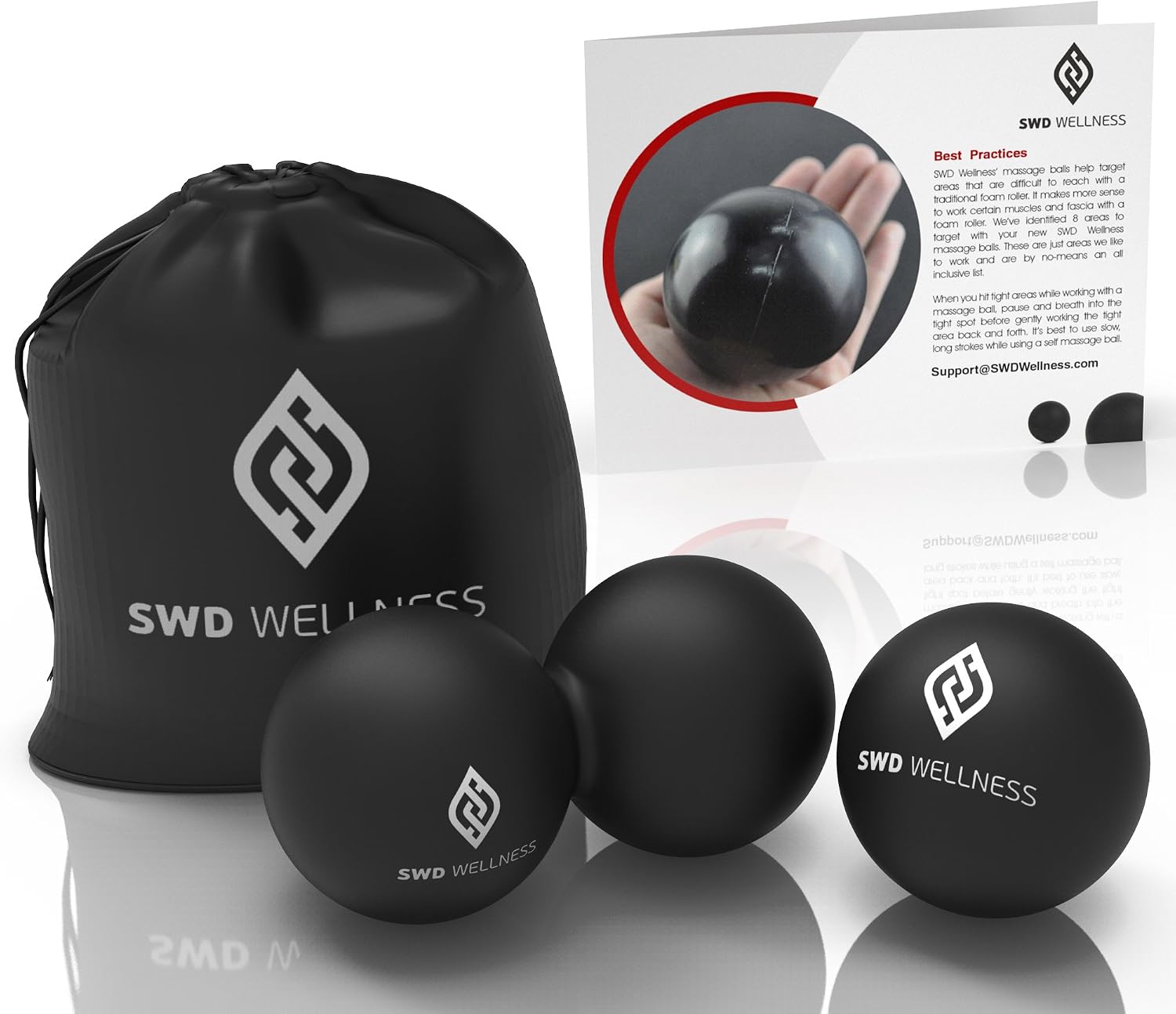
Peanut Massage Ball and Lacrosse Ball Set by SWD Wellness
Two-piece massage ball set for myofascial release, trigger point therapy, and tight muscle relief.
Check price on Amazon
Gaiam Essentials Yoga Block Set of 2 - Supportive Latex-Free EVA Foam, Grey
Two lightweight EVA foam yoga blocks with beveled edges and a non-slip surface for yoga, Pilates, and meditation.
Check price on Amazon
Etekcity Smart Body Fat Scale, Bluetooth, 13 Body Metrics
Bluetooth body fat scale measuring 13 metrics including BMI, muscle mass, and bone mass via free app.
Check price on AmazonTwo honest starting points. No pressure toward either one.

Everything I write comes from one idea: build a life you own, one stream at a time.
Want me to show you exactly how I do it, step by step, in your language? This is where it starts.
Come build with meMore in this lane.
Peptides for Healing: What the Research Actually Shows
Peptides for healing are signaling molecules, not patches. Here is what the research actually says about BPC-157, collagen peptides, and recovery.
MAKE Wellness Peptides Review: What They Are and What Nine Months Changed
A nine-month MAKE Wellness peptides review: what the ingredients actually are, what the research supports, oral vs injectable safety, and what changed.
Collagen Peptides: What They Actually Do (and the Peptides I Take Alongside Mine)
What collagen peptides are, whether they work for skin and joints, and why the glow you are chasing comes from more than one scoop. A guide from a daily collagen drinker.

Get the next post in your inbox.
One email when there is something new worth reading. Writing on health, income, and the practical reality of building a life on your own terms. No spam. Easy to leave at any time.
Unsubscribe with one click, any time. Your email stays with me and Kit, my email provider. · Privacy policy
I also publish on Substack: different essays, written for the inbox, the same long game.
Also on Substack