MAKE Wellness Peptides Review: What They Are and What Nine Months Changed
A nine-month MAKE Wellness peptides review: what the ingredients actually are, what the research supports, oral vs injectable safety, and what changed.

May contain affiliate links; I may earn a commission at no extra cost to you. Everything here is my opinion, not medical advice. Full disclosures
At some point I stopped seeing myself as someone spending money on supplements and started seeing myself as someone paying close attention to his own sleep. I was waking up at 3am four nights out of seven, dragging myself to a Red Cross shift running on fumes and a bad attitude. MAKE Wellness peptides are plant-derived bioactive peptide drinks designed to support metabolism, recovery, sleep, and focus. They are a food-supplement category product, not a drug. Whether they do what they say depends on which peptide, in which product, at what dose, and on what you were paying attention to before you started.
Key Takeaways
Small upgrades to your wellbeing and lifestyle. Simple, well-reviewed items to support your journey. As an Amazon Associate I earn from qualifying purchases, at no extra cost to you.
Intelligent Change The Five Minute Journal, Original Daily Gratitude Journal, Undated
Undated structured six-month journal with morning and evening positive-psychology prompts in a linen hardcover A5 format. 1.3M+ sold.
Check price on AmazonWhat are MAKE Wellness peptides, exactly?
Peptides are short chains of amino acids that act as cellular messengers. Some regulate hormones, some trigger tissue repair, some sit in the sleep-wake conversation between your gut and your brain. The ones in MAKE Wellness are bioactive peptides isolated from plant sources, formulated as daily drink sticks. A 2025 systematic review in the International Journal of Molecular Sciences looked at clinical trials from 2019 to 2024 and found consistent metabolic and musculoskeletal effects for specific peptide sequences in human nutrition, which is the lane MAKE sits in.
The branded ingredient that gets named most often in their formulas is PeptiStrong, a fava-bean-derived complex studied for muscle maintenance, which sits inside the FIT product. I had to read that twice the first time. A fava bean is not a magic protein, it is a legume that happens to yield a peptide sequence that has shown up in human clinical work on strength and recovery.

Not sure which peptide fits you?
A couple of quick questions and the free quiz shows you where Bioactive Precision Peptides could support your wellbeing.
Take the 2-minute quizWhat does the science actually support, and what is still early?
Over 100 drugs approved by the FDA are peptide-based, including insulin and the GLP-1 family people now know by names like Ozempic. That is the legitimate, well-evidenced end of the peptide spectrum. Dietary bioactive peptides sold as supplements are a different, less regulated category, and Scientific American was right to point out that most consumer peptide products have limited clinical evidence on the exact branded blends being sold.
The peptides that make alarming headlines are the unregulated injectable ones bought from anonymous online vendors and drawn into a syringe, a category regulators treat as prescription drugs and keep warning people away from. MAKE's peptides are the opposite of that: oral, naturally-derived, disclosed on the label, stirred into water or swallowed as a capsule. If a "peptides" headline scared you here, check first whether it was even about the oral, food-derived category. Most are not.
Inside that lane, some specific sequences have real signal. A 2024 randomized, double-blind, placebo-controlled trial of 70 healthy adults gave a low-molecular-weight collagen peptide (1,650 mg/day including 74.25 mg of Gly-Pro) for 8 weeks and measured significant skin parameter improvement versus placebo, published in Nutrients. PeptiStrong has published human clinical signal for muscle maintenance. For sleep specifically, the human peer-reviewed evidence on dietary peptides is thinner. My own experience is a structure/function observation about one person, not a treatment claim about a disease.
The bioavailability question a skeptic raises first
Peptides are short protein chains, and the stomach is designed to break protein chains down. Gastric acid and intestinal proteases hydrolyze most ingested peptides into individual amino acids before they reach systemic circulation, which is why injectable peptides exist as a separate category in the first place.
The partial answer is that not every peptide is degraded equally. Short, low-molecular-weight sequences (roughly under 3 kDa, and especially di- and tri-peptides) can survive digestion intact and cross the intestinal barrier through specific transporters like PepT1. That is precisely why the 2024 Nutrients trial used a low-molecular-weight collagen fraction at a specified Gly-Pro dose, and why PeptiStrong is studied as a defined sequence rather than a whole-bean protein extract. The size and the sequence are the controls. I know what was designed to survive digestion in the FIT formula because PeptiStrong is named and studied as a defined complex. I cannot say the same for every product where the sequence is not named. That is the gap, and it is also why I trust a named, studied complex more than a generic "peptide" claim on a label that does not name the molecule.
Which MAKE Wellness products contain which peptides?
There are seven products in the line, and most people searching this keyword want a functional map before they pick one. For a deeper teardown, I keep a full breakdown of every MAKE Wellness product updated separately.
- RESTORED: The sleep one, and the product I credit most for what happened to my nights. It is built on a peptide blend with GABA, L-theanine, and apigenin, aimed at calming the nervous system and deepening real sleep rather than just sedating you. This is the one a friend first told me about, and the one I will not run out of again if I can help it.
- FIT: PeptiStrong (fava-derived) for muscle maintenance and recovery. Orange flavor. I drink it four mornings a week, usually right after I walk the dog, before I have eaten anything. This is the product with the loudest published research behind its named ingredient.
- LEAN: Built on Apticurb Trimfast for the gut-to-brain appetite signal. My partner Jordan runs this one for the afternoon cravings. The specific peptide is less openly named than PeptiStrong is on FIT, which is a transparency point worth knowing before you buy.
- ENERGIZED: The clean-energy one. This is what finally replaced the coffee-and-crash cycle for me, a lift that stays level instead of spiking and dropping me at 3pm.
- FOCUSED: The capsule for work that needs real attention. Cognitive lane.
- CALM: The daytime stress one, a lemon-citrus melt built on ashwagandha and lemon balm, for coming down off the stress curve without the drowsiness that makes most calming products useless in daylight.
- HYDRATED: Electrolyte-forward, the foundation you take first, and the one I reach for most because the flavor is good enough to actually stick.
I do not run all seven. I run RESTORED at night, FIT four mornings a week, and HYDRATED through the day.

Get the next post in your inbox.
One email when there is something new worth reading. No spam, leave any time.
Small upgrades to your wellbeing and lifestyle. Simple, well-reviewed items to support your journey. As an Amazon Associate I earn from qualifying purchases, at no extra cost to you.
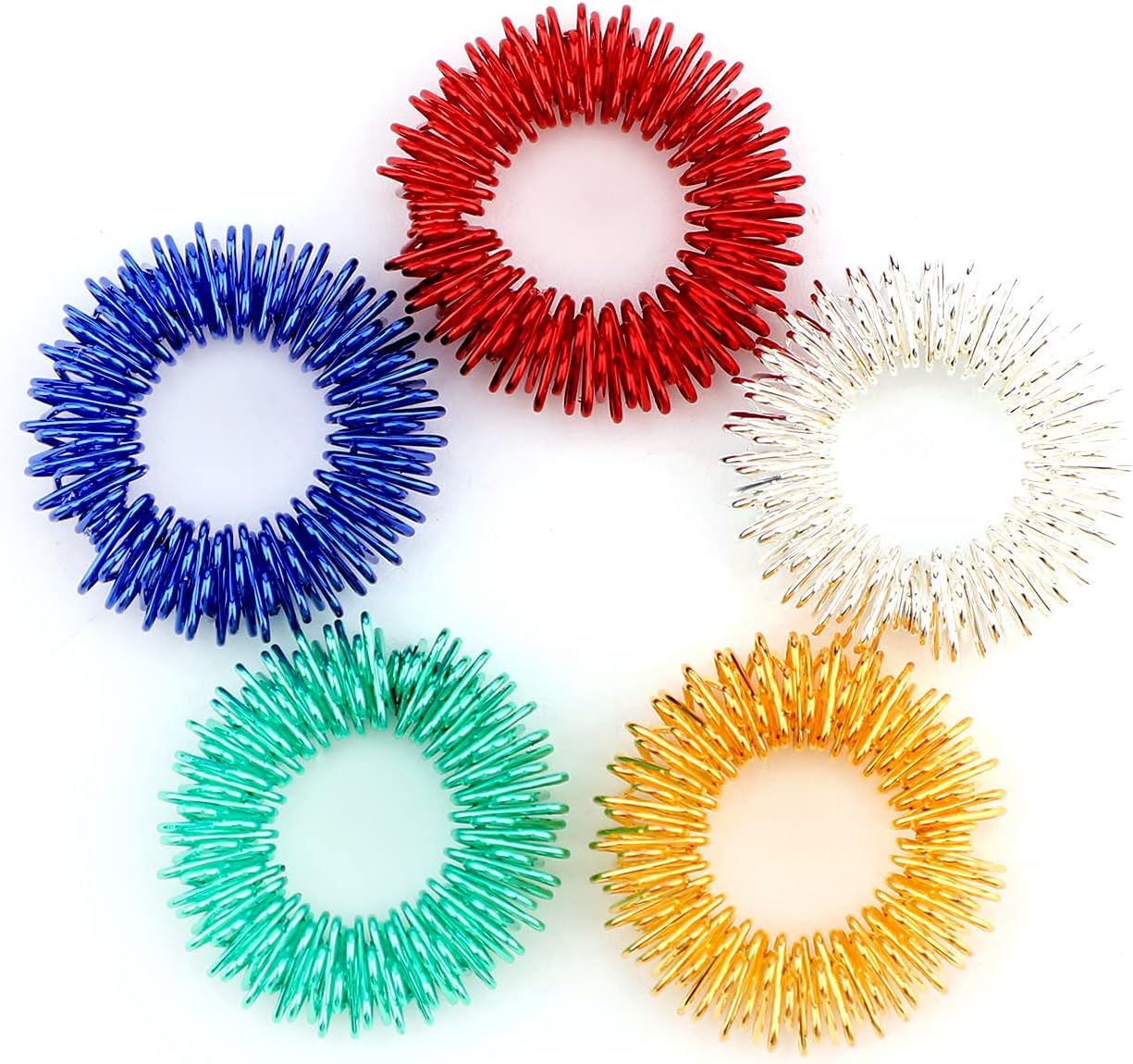
SAVITA 5-Pack Spiky Sensory Finger Acupressure Massage Rings
Five colorful spiky metal rings rolled along fingers for acupressure stimulation and quiet desk stress fidgeting.
Check price on AmazonIs MAKE Wellness an MLM, and does that change whether the peptides work?
Yes, MAKE Wellness is structured as direct sales with an affiliate layer. The monthly cost of running the full breakthrough stack is steep, and the proprietary-blend disclosure on some products is thinner than I would like.
The one difference that matters is that the distribution model and the biochemistry are two separate questions. A peptide either has clinical evidence behind it or it does not, regardless of who sells it or how the commission tree is shaped. I buy the products because I saw a result on a thing I cared about, and I share the affiliate link because it earns me one small stream alongside several others. If you want the inside view of the comp side specifically, I wrote about how the MAKE Wellness affiliate program works from the inside.
What changed for me in nine months, and what stayed the same
A friend who had not slept properly in years told me the thing that finally helped her was RESTORED, so I tried it. I started in late summer. Over the first couple of months the 3am wakeups dropped from roughly four nights a week to the occasional one. I notice it less in any number and more in whether the mornings feel like being dragged out of bed or like waking up before the alarm clear-headed. The cleanest evidence I have is accidental: there was a stretch when my supply lapsed and the old pattern crept back within a week or so, and when it resumed the mornings got easier again. By a stretch of consecutive Red Cross shifts that historically wrecked me, the energy floor was meaningfully higher.
What did not change. Body composition did not shift without me also changing what I ate, which is exactly what the systematic review evidence would predict for a peptide supplement used in isolation. A genuinely bad sleep night, the kind caused by a kid waking up sick or a late argument, was still a bad night. Nothing in a drink stick fixes the underlying input. Peptides are not anabolic steroids, which is a question I get every week and which I wrote a separate post on for anyone still tangling the two.
Small upgrades to your wellbeing and lifestyle. Simple, well-reviewed items to support your journey. As an Amazon Associate I earn from qualifying purchases, at no extra cost to you.

Tumaz Stretching Strap with 10 Loops - Non-Elastic Yoga Strap for Physical Therapy
80-inch non-elastic strap with 10 loops for guided stretching in yoga, physical therapy, and flexibility training.
Check price on AmazonHow much do MAKE Wellness peptides cost in Canada, and is there a discount?
For the better part of a year, before the Canadian launch, the only way I could get these was to have a friend carry them up from the States and pay her cash, because the product was not sold here yet. On July 1, 2026, MAKE Wellness launched in Canada, and Canadians can now order directly. The brand applies a 10% first-order discount through the affiliate path automatically, so click here to try MAKE Wellness with 10% off your first order and the discount is applied at checkout, no code to copy. For shipping timelines and the Canadian pricing picture, I wrote a full MAKE Wellness Canada guide.
A practical note that applies to any peptide supplement, not only this one. Look for third-party testing, look for dosage transparency on the active peptide (not only the total formula weight), and look for a brand that will name the ingredient by its real research name, not only its trademarked one. If the phrase "make wellness peptides" brought you here because you are trying to figure out whether they overlap with the injectable peptides sold by Canadian compounders, they do not, those are a separate category with separate rules, and I unpacked that in a post on what peptides for weight loss actually means.
You are already spending on wellness every month. The only question is whether what you are buying moves something you can actually point at. The thing I had was a 3am wakeup pattern that had run for years, and a simple before-and-after I paid attention to. The before matters more than the after, because it is the only thing that makes the after mean anything.
Most people who read this will close the tab and keep buying whatever supplement the algorithm served them last week. A few will pick one thing they can actually notice, write down where it stands today, and leave it alone for a couple of months before they judge it. This is written for the few.

Brazilian-Canadian on Vancouver Island. Former ballet artist, current builder of small ventures. Posts here cover health, income, and the long game.
FAQ
What are the ingredients in MAKE Wellness peptides?
Each product is built on a named peptide complex plus a support matrix. RESTORED uses a blend MAKE calls PeptiSleep with GABA, L-Theanine and Apigenin; FIT uses Metabolic Matrix with PeptiStrong PLUS, a fava-derived complex studied for muscle maintenance; CALM uses ashwagandha and lemon balm. The whole line is held to the Clean Slate standard, made without artificial sweeteners, dyes, seed oils, parabens and harsh stimulants. MAKE names its actives but not every individual milligram.
Are MAKE Wellness peptides the same as injectable peptides?
No. MAKE's peptides are oral and naturally-derived, sold as dietary supplements you stir into water or swallow as a capsule. The peptides people get hurt by are the unregulated injectable ones from anonymous online vendors, a separate category regulators treat as prescription drugs. Do not put a flavored stick pack in the same bucket as a vial from an unverified website.
How much do MAKE Wellness peptides cost in Canada, and is there a discount?
Canada is MAKE's first international market, launched July 1, 2026, and Canadians can now order directly. The affiliate path applies a 10% first-order discount automatically at checkout, no code to copy. I wrote the full MAKE Wellness Canada guide for shipping details.
Does RESTORED actually work if you aren't tracking anything?
I trusted my own result because the change was big enough to notice in how the mornings felt, and because it crept back when my supply lapsed. If you are not paying attention to anything, you are relying on vague memory, which is harder to separate from placebo. Picking one thing you can actually notice gives you something real to measure against.
Can I run just one product, or do I need the full stack?
I run three out of seven, not all of them. RESTORED is the one I would keep if I had to choose one. The 'breakthrough stack' framing comes from the sales side, the biochemistry doesn't require buying everything at once.
How long before I'd expect to notice anything?
The change was gradual for me, not immediate. Any peptide operating through cellular signaling takes time to accumulate a readable signal, anyone promising dramatic results in two weeks is selling you something the science doesn't support.
Are these safe to take alongside common supplements or medications?
I'm not a clinician and this isn't medical advice, that question belongs to your doctor or pharmacist, especially if you're on anything prescription. What I can say is these are oral, food-derived supplements, not the injectable peptide category generating the alarming headlines, but that doesn't mean zero interaction risk for everyone.
Can you stack RESTORED with melatonin?
I tried it for a few nights early on and my sleep got worse, not better, the kind of pattern I have seen described as melatonin overshooting an already-quieted system. I stopped stacking them, run RESTORED alone now, and ask your pharmacist before combining anything sleep-active if you are on prescriptions. One person's experience is not a clinical trial.
Small upgrades to your wellbeing and lifestyle. Simple, well-reviewed items to support your journey. As an Amazon Associate I earn from qualifying purchases, at no extra cost to you.

Gritin Resistance Bands, Set of 5 Skin-Friendly Fitness Loop Bands with Carrying Case
Five colour-coded natural latex loop bands across five resistance levels, packaged with a carry case for home, gym, or travel use.
Check price on Amazon
Hicober Microfiber Hair Towel Wraps, 3 Pack
Three button-fastened microfiber turbans that cut drying time and frizz without heat.
Check price on Amazon
RYVE Daily Gratitude Journal for Women: 6-Month Guided Positivity and Wellness Journal
6-month guided journal with daily affirmation prompts, gratitude entries, and weekly reflections on 100gsm lay-flat pages.
Check price on AmazonTwo honest starting points. No pressure toward either one.

Everything I write comes from one idea: build a life you own, one stream at a time.
Want me to show you exactly how I do it, step by step, in your language? This is where it starts.
Come build with meMore in this lane.
MAKE Wellness: What It Is, What's In It, and What Nine Months Changed
MAKE Wellness sells naturally-derived peptide supplements. What is actually in them, what is deliberately left out, and what changed for me over nine months.
MAKE Wellness Peptides Side Effects: What Nine Months Taught Me
Nine months on MAKE Wellness peptides. The real side effect profile, the regulatory line nobody draws, and the one week that felt uneven.
The MAKE Wellness Products, Explained: What All Seven Actually Do
What each of the seven MAKE Wellness peptides supports, which earned a place in my routine, and how to think about side effects. From real use since summer.

Get the next post in your inbox.
One email when there is something new worth reading. Writing on health, income, and the practical reality of building a life on your own terms. No spam. Easy to leave at any time.
Unsubscribe with one click, any time. Your email stays with me and Kit, my email provider. · Privacy policy
I also publish on Substack: different essays, written for the inbox, the same long game.
Also on Substack