What Are Peptides? Your Body Is Having 7,000 of These Conversations Right Now
What are peptides? Short amino-acid chains your body uses to signal sleep, appetite, recovery, focus, and calm. A plain-language guide to what they are and how they actually work.

May contain affiliate links; I may earn a commission at no extra cost to you. Everything here is my opinion, not medical advice. Full disclosures
Insulin is a peptide. So is oxytocin. So is the chemical signal your stomach sends to your brain when you have eaten enough. So is the messenger that wakes muscle tissue up for repair after a hard training session. Peptides are not exotic, and they are not a fad. They are how your body has been talking to itself the entire time you have been alive.
I have been quietly fascinated by the peptide category since last summer. Not because of the marketing, which is loud and getting louder, but because of the underlying biology, which is steady, well-mapped, and genuinely interesting. I am a former professional ballet dancer approaching forty, and the parts of my body that took decades to build now ask me to think more carefully about how I support them. Peptides, the real ones with real research behind them, kept coming up in everything I was reading. So I read more. Then I tried them. Then I read more again.

Not sure which peptide fits you?
A couple of quick questions and the free quiz shows you where Bioactive Precision Peptides could support your wellbeing.
Take the 2-minute quizKey Takeaways
Small upgrades to your wellbeing and lifestyle. Simple, well-reviewed items to support your journey. As an Amazon Associate I earn from qualifying purchases, at no extra cost to you.

Weekly Pill and Vitamin Organizer, 2 Pack
Two round seven-day organizers with labeled compartments for daily routines and travel.
Check price on AmazonWhat Are Peptides?
A peptide is a short chain of amino acids. Somewhere between two and fifty units long, depending on whom you ask. Smaller than a full protein, larger than a single amino acid. Your body manufactures and uses an estimated seven thousand distinct bioactive peptides, and they participate in roughly ninety-eight percent of the biological processes happening inside you in any given second. There are more than fifty peptide hormones in regular circulation. Six hundred-plus muscles in your body receive at least part of their instructions in peptide form. They are not a wellness invention. They are biology, and biology has been working on them for as long as cells have needed to talk to one another.
The reason peptides matter is that they are the language your body uses to coordinate complicated work. MAKE Wellness has a phrase for this that I have come to genuinely like: peptides are "text messages for your body." Each one is a short, specific instruction sent from one place to another, and the body has been routing those messages every second of your life. A single cell cannot run the entire show. It needs to receive instructions from elsewhere, and it needs to send them. Hormones, neurotransmitters, growth factors, immune messengers, satiety signals, sleep signals, recovery signals, an enormous amount of that traffic is peptide traffic. When you eat a meal and your stomach lining releases ghrelin to tell your brain you are hungry between meals, that is a peptide. When you finish eating and your gut releases GLP-1 to tell your brain you have had enough, that is a peptide. When you train and your tissues call for repair, the call goes out in peptide form. When you fall asleep and your brain shifts from one stage of sleep to another, peptides are part of the orchestration. We are not introducing the body to a stranger when we study this category. We are studying a vocabulary the body already speaks fluently.
Insulin, one of the most consequential peptides in medicine, was isolated by Banting and Best in Toronto in 1921. Frederick Sanger sequenced it and won the Nobel Prize for the work in 1958, establishing for the first time that peptides have specific, knowable structures that can be mapped and reproduced. From there the field opened up in stages. GLP-1, the appetite-signaling peptide that has become famous lately because of prescription weight-management drugs based on it, was characterized in the 1980s. The same decade saw the discovery of growth hormone-releasing peptides and the start of serious work on food-derived bioactive peptides, the small fragments released when your body digests milk, soy, fish, eggs, and other proteins. The 1990s and 2000s saw an explosion in this last category, with researchers documenting peptides that gently support blood pressure regulation, peptides that signal satiety, peptides that support antioxidant defense, peptides that show up in joints and skin after oral consumption of collagen. Today, the number of papers indexed in PubMed under the term "bioactive peptide" runs into the tens of thousands. This is not a fringe area. It is a mature and active field of biology.
The way peptides work in the body is, in its essentials, beautifully simple. The mechanism is sometimes called the lock-and-key model, and the metaphor is almost too neat to be real. Each peptide has a specific three-dimensional shape. Cells throughout the body display receptors on their surfaces, and each receptor is also shaped specifically. When a peptide matches a receptor, it binds, and the binding triggers an instruction inside the cell. Release this hormone. Build this protein. Fire this neurotransmitter. Slow down this metabolic pathway. The specificity is the entire point of the system. A peptide that signals satiety does not accidentally tell your liver to make cholesterol. Each one has a job, a target, and a window of time it stays active. The body has spent a very long time engineering this signaling system, and it has gotten very good at it.
Long before anyone was selling peptides in a bottle, researchers were studying how the ordinary digestion of ordinary foods produces small peptide fragments with measurable biological effects. Milk proteins broken down during digestion produce peptides that gently support healthy blood pressure regulation through what is called the angiotensin-converting enzyme pathway. Whey protein hydrolysates produce satiety-signaling peptides that contribute to feeling full longer after a meal. Collagen peptides taken orally show up in connective tissue and support joint comfort and skin elasticity, with multiple controlled trials behind the claim. Soy peptides contribute antioxidant activity. Fish-derived peptides have been studied for cardiovascular support. The science is real, the mechanisms are mapped, the safety profile is well-established across decades of human consumption, and the research has been pouring in steadily for thirty years.

Get the next post in your inbox.
One email when there is something new worth reading. No spam, leave any time.
Small upgrades to your wellbeing and lifestyle. Simple, well-reviewed items to support your journey. As an Amazon Associate I earn from qualifying purchases, at no extra cost to you.

Perfect Fitness Perfect Pushup Rotating Push Up Handles
Rotating push-up handles that engage more muscle groups and reduce wrist strain vs floor push-ups.
Check price on AmazonWhere the Research Meets the Bottle
The newer generation of bioactive peptide supplements builds directly on this foundation. The idea is straightforward. Instead of leaving it to digestion to randomly produce useful peptide fragments from whatever protein you happened to eat, formulate a product around peptides that have been specifically studied for the signaling function you actually want. Pair them with delivery technology designed to keep them intact through the stomach so they reach the bloodstream still capable of binding to their target receptors. Match them to the categories that people most consistently care about. That is the model. It is not a miracle and it is not a shortcut. It is targeted nutritional support built around how the body's own signaling system works.
The seven categories where this kind of formulation makes the most sense are also the seven categories with the deepest research behind them, and they happen to be the exact areas most adults pay attention to as they get older. Appetite signaling, the gentle nudge that helps the satiety conversation between gut and brain happen on time, not three hundred calories too late. Lean tissue and body composition support, keeping muscle responsive and active rather than letting it quietly slip away with age. Sleep architecture, supporting the deeper stages of sleep, which is where so much real recovery work happens. Sustained, jitter-free energy, supporting the cellular machinery that produces it rather than papering over fatigue with stimulants. Mental clarity and focus, supporting the neurotransmitter systems your brain uses to concentrate. Cellular hydration, supporting how your body actually puts water and electrolytes to work at the cellular level rather than just running them through. And stress modulation and calm, supporting the body's own ability to come back down from the stress curve rather than staying elevated all day.
You will recognize some of those targets. They are the same ones MAKE Wellness has built its seven-product line around, which is one of the reasons the brand caught my attention in the first place. The categories are real, the science behind each one is real, and matching peptide signaling to those particular outcomes is exactly the kind of careful, targeted approach that the underlying biology actually supports. It is not the only sensible product line in this space, but it is one of the few I have read about whose product map actually corresponds to where the research is strongest.
The formulation platform itself has a name. MAKE calls it Bioactive Precision Peptides™, and it is built around five named peptide ingredients that recur across the line: Vicia faba (fava bean) peptides, Saccharomyces cerevisiae (yeast) peptide hydrolysate, a proprietary fatigue-fighter peptide blend, ginseng peptides, and ginkgo peptides. Each ingredient is paired with delivery technology designed to keep the molecule intact through digestion so it actually reaches the bloodstream still capable of binding to its target. The category-specific products then layer additional complexes on top of that base. PeptiSleep™, a brown rice protein hydrolysate paired with L-Theanine, GABA, and apigenin, anchors the sleep formula and works without melatonin in the mix. NeuroSync™ Technology sits in the focus product. Apticurb Trimfast Complex™ anchors the appetite product. Metabolic Matrix™ supports the lean-tissue side. The trademarks are MAKE's. The underlying ingredients are studied compounds with real research behind each one, and the proprietary part is the formulation and delivery work that pulls them together.
The reason I started paying attention personally is that the categories matched the things I genuinely wanted to support. Sleep on the nights after a hard workout. Appetite that did not crash and overshoot in the middle of the afternoon. Recovery that felt clean rather than feeling like aging. Sustained energy through long days that include both desk work and physical work. Mental clarity through projects that ask for real attention. None of those is a disease. None of those is something a doctor would write a prescription for. They are the regular, daily, very normal things a body in its late thirties pays attention to. And the body's own peptide signaling, which it has been running quietly for forty years without my permission, is exactly the system you would expect to be the right entry point for that kind of support.
Peptides are not steroids. They are not hormones in the anabolic-steroid sense. They are not pharmaceuticals when sold as supplements, and the bioactive peptide supplement category is structurally and legally a very different thing from prescription peptide drugs. They are not magic, and they are absolutely not a substitute for sleep, training, or food. A bioactive peptide supplement supports the body's existing signaling. It does not replace the upstream work. If your sleep is wrecked because you go to bed at one in the morning, the most beautifully formulated sleep-supporting peptide in the world is going to have to compete with the choices you are making every night. The peptide is the gentle nudge. Your habits are still the engine. That is true of every category in this space.
The other thing peptides are not is a quick win. They are signaling molecules, not stimulants. The changes show up subtly, in layers, over weeks rather than minutes. Some categories, sleep, appetite, produce shifts that are easy to notice. Others, like cellular hydration or stress modulation, show up as a quieter sense of regulation rather than a felt rush. The right observation window for any of this is two to four weeks of consistent use, not a single day. If you take something for three days, decide it does not work, and stop, you are not gathering enough information to make any assessment.

Small upgrades to your wellbeing and lifestyle. Simple, well-reviewed items to support your journey. As an Amazon Associate I earn from qualifying purchases, at no extra cost to you.
Himalayan Glow Natural Pink Salt Lamp with Brightness Control Dimmer Switch, 5-7 lbs
Hand-carved pink Himalayan salt lamp with ETL-certified dimmer switch and wooden base for warm ambient light.
Check price on AmazonThe Soft Door
The biology is the part that has been steadily convincing me across the months I have spent paying attention.
If reading any of this also made you curious about trying the products I personally use, you can do that through my affiliate link. New customers get $10 off their first order of $99 or more, automatically. Click here to shop, the discount applies at checkout with no code to copy. There is no monthly minimum, no auto-ship unless you specifically choose it, and no obligation beyond the order you decide to place.
If you would rather read about why I joined this company as an affiliate before deciding anything, I wrote the longer version of that story in The Quiet Logic of Buying From Yourself. It explains the business side, the income-stream logic, and the way the Modern Affiliate model actually works. If you want to talk through any of it directly, the contact page and my Instagram are both open. I read everything that comes in.
The science is the part of this that I find genuinely beautiful. The body has been quietly running a peptide-based signaling system for as long as you have been alive, and we are slowly learning enough about that system to support it more skillfully.

Brazilian-Canadian on Vancouver Island. Former ballet artist, current builder of small ventures. Posts here cover health, income, and the long game.
FAQ
What are peptides?
A short chain of amino acids, typically between two and fifty units long. Smaller than a full protein, larger than a single amino acid. Your body manufactures and uses thousands of them every day as signaling molecules, instructions that travel from one set of cells to another. Insulin, oxytocin, ghrelin, leptin, glutathione, and many neurotransmitter precursors are all peptides.
How are peptides different from collagen, whey, or regular protein powder?
Whole proteins like whey and collagen are long chains of amino acids. When you digest them, your stomach breaks them down into smaller peptide fragments and individual amino acids. Some of those fragments have specific signaling effects in the body, which is part of why protein in your diet matters beyond just providing building blocks. A targeted bioactive peptide supplement skips the digestive lottery. Rather than asking your stomach to randomly produce the right peptide fragment from whatever protein you ate, the supplement delivers the specific fragment that has been studied for the effect you are looking for, in a form designed to stay intact through digestion.
Are peptides safe?
The research on food-derived bioactive peptides is decades deep and broadly positive on safety, since the underlying compounds are the same ones produced when you digest ordinary foods. Specific peptide products vary widely in formulation and quality, and reputable manufacturers publish their ingredients, sourcing, and third-party testing. As with anything you put in your body, check the label, check the company, and if you take prescription medication, talk to your doctor about possible interactions before adding any new supplement to your routine.
Will I "feel" peptides working the way I feel caffeine?
Realistically, no, and you should not expect to. Peptides are signals, not stimulants. The changes are subtle, layered, and tend to show up over weeks rather than minutes. Some categories, sleep and appetite signaling especially, produce shifts that are noticeable within a couple of weeks. Others, like cellular hydration or stress modulation, show up as a quieter sense of regulation rather than a felt rush. The right observation window is two to four weeks of consistent use, not three days.
Are peptide supplements the same thing as Ozempic or semaglutide?
They share a biological family, Ozempic and similar drugs are GLP-1 receptor agonists, and GLP-1 is a peptide, but the comparison ends there. Prescription GLP-1 agonists are pharmaceutical-strength compounds designed to flood the system with a powerful, sustained satiety signal. Bioactive peptide supplements are a much gentler, lower-dose category that supports the body's existing signaling rather than overriding it. Different products, different doses, different categories, different conversations. One requires a prescription. The other is a food-derived supplement. I map both sides of that confusion in full in peptides for weight loss.
How long until I notice anything?
Two to four weeks of daily, consistent use is a reasonable window before forming an opinion. Sleep and appetite categories tend to show up earlier, energy and recovery often follow a little later, and the quieter categories like hydration and stress modulation usually announce themselves through a general sense of being more regulated rather than a single moment of "wow." If you take something for three days and stop, you are not gathering enough information to assess anything.
Why MAKE Wellness specifically, and not another company in this space?
I had been using their products for about nine months before they opened the Canadian market, on the unreliable trickle a friend carried up from Seattle whenever she passed through. The categories the company built its product line around line up cleanly with the categories where the underlying peptide research is strongest. The Modern Affiliate model also has no monthly minimums, no required auto-ship, and pays daily rather than monthly, which matters when you are running other ventures. I wrote about the full reasoning in The Quiet Logic of Buying From Yourself.
What is your actual relationship with MAKE Wellness?
I am an independent Canadian affiliate, after the better part of a year as a private customer of the product line, an intermittent one, since before MAKE opened in Canada I could only get the products when a friend carried them across the border. The link in this post is my affiliate link with a $10-off code applied for readers.
Small upgrades to your wellbeing and lifestyle. Simple, well-reviewed items to support your journey. As an Amazon Associate I earn from qualifying purchases, at no extra cost to you.
Sdara Skincare Derma Roller - Microneedling Roller for Face with Storage Case
0.25mm titanium microneedling roller with 540 needles for gentle exfoliation and collagen-boost prep.
Check price on Amazon
Yes4All Combo Vinyl Coated Kettlebell Weight Sets (10-20 lbs)
Vinyl-coated cast iron kettlebells in a 10-20 lb combo set with flat base for stability during workouts.
Check price on Amazon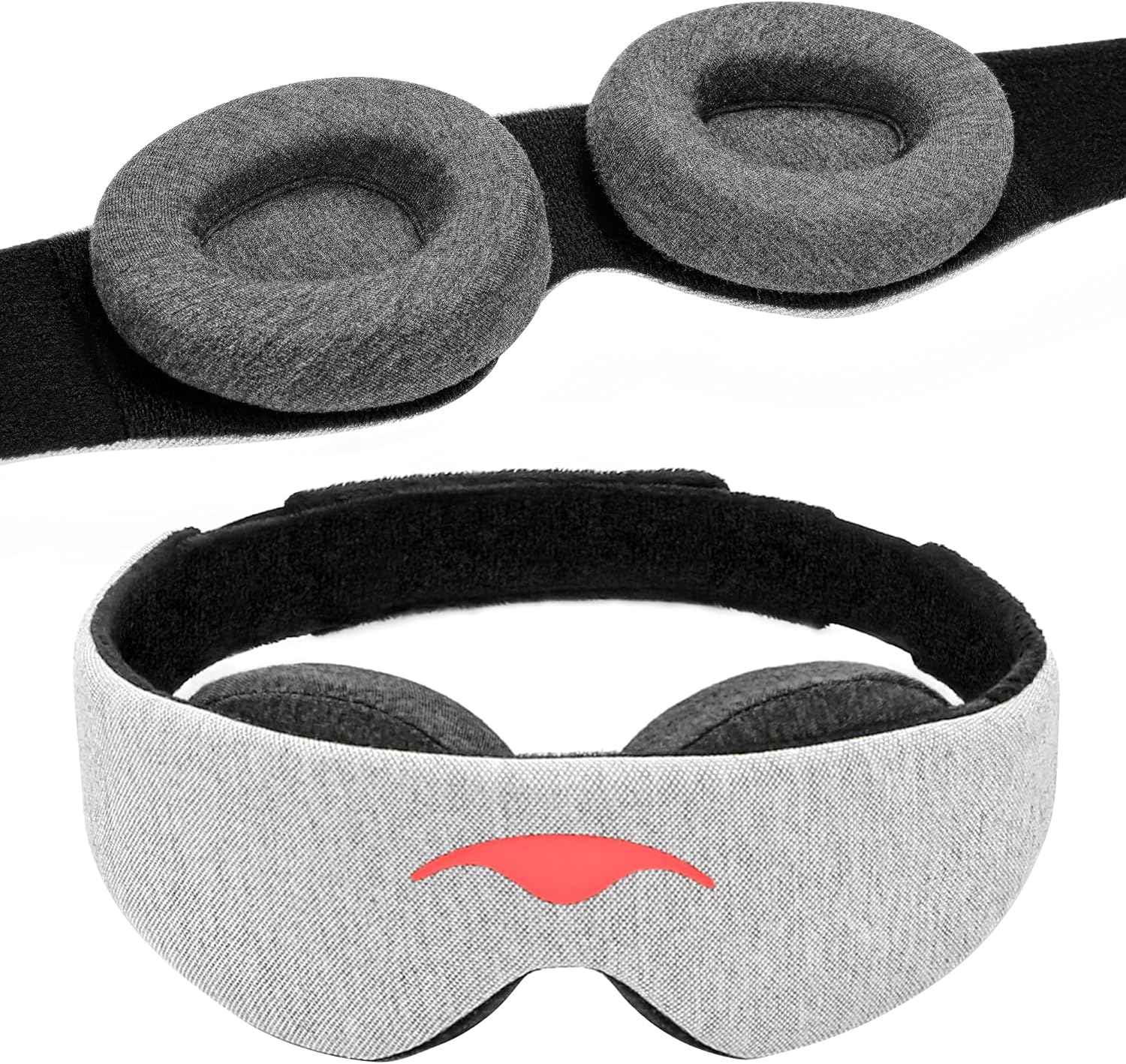
Manta Original Sleep Mask, Maximum Blackout, Adjustable with Detachable Eye Cups, Zero Eye Pressure
Adjustable blackout sleep mask with detachable repositionable eye cups that create total darkness without pressing on eyelids.
Check price on AmazonTwo honest starting points. No pressure toward either one.

Everything I write comes from one idea: build a life you own, one stream at a time.
Want me to show you exactly how I do it, step by step, in your language? This is where it starts.
Come build with meMore in this lane.
Peptide Supplements: What the Research Actually Says (And What I Found Out)
Peptide supplements are not one thing. Here is what the human evidence actually supports, what is still animal-study territory, and what nine months on a naturally-derived blend looked like.
Peptides for Weight Loss: The Two Very Different Things That Phrase Means
Search peptides for weight loss and two worlds tangle: injectable GLP-1 drugs, and the food-derived peptides I take. The difference, and the muscle catch.
The MAKE Wellness Products, Explained: What All Seven Actually Do
What each of the seven MAKE Wellness peptides supports, which earned a place in my routine, and how to think about side effects. From real use since summer.

Get the next post in your inbox.
One email when there is something new worth reading. Writing on health, income, and the practical reality of building a life on your own terms. No spam. Easy to leave at any time.
Unsubscribe with one click, any time. Your email stays with me and Kit, my email provider. · Privacy policy
I also publish on Substack: different essays, written for the inbox, the same long game.
Also on Substack