Best Peptides for Sleep Quality: What the Research Actually Shows
The three most studied peptides for sleep work on different mechanisms. Here is what the research supports, what it does not, and what nine months of tracking taught me.

May contain affiliate links; I may earn a commission at no extra cost to you. Everything here is my opinion, not medical advice. Full disclosures
The first thing I noticed, around month four, was that I stopped waking up at 3am. Not every night, but the pattern broke. I had lived with that 3am waking for years, the cold Courtenay winter mornings being the worst for it, and somewhere in February I realized it had quietly stopped happening most weeks. If you came here from a search for the best peptides for sleep, the short answer is this: the three most studied are DSIP, Epithalon, and the CJC-1295 + Ipamorelin stack. Each works on a different mechanism, cortisol modulation, melatonin regulation, and growth hormone pulse amplification, and the right one depends on what is actually broken in your night.
At some point I stopped seeing myself as someone who just pushed through being tired and started seeing myself as someone running a protocol. One frame accepts fragmented sleep as a fixed personality trait. The other treats it as a variable you can move. That shift, more than any single compound, is what made me actually pay attention to which mechanisms map to which problem.
What are the best peptides for sleep?
Sleep peptides are not interchangeable. The three most evidence-backed compounds, DSIP, Epithalon, and the CJC-1295 with Ipamorelin stack, each target a different sleep system. DSIP modulates the cortisol cycle, so it is the candidate when stress chemistry is keeping you wired at midnight or waking you up too early. Epithalon acts on the pineal gland to support melatonin output, which matters most when age or chronic stress has flattened your natural melatonin curve. The CJC-1295 + Ipamorelin stack works on the growth hormone pulse that fires during slow-wave sleep, so it is aimed at recovery quality, not sleep onset. The PeptideDeck research guide and the KnowYourPeptide 2026 review both organize them this way, and the MDIHA clinical timeline notes that observable benefit windows differ for each. Pick the wrong one for your actual problem and you will conclude peptides do not work, when really you just chose a tool for a different job. If the whole category is new to you, my post on how peptide signaling works at the cellular level is a good preface.
Small upgrades to your wellbeing and lifestyle. Simple, well-reviewed items to support your journey. As an Amazon Associate I earn from qualifying purchases, at no extra cost to you.
Luna Adult Weighted Blanket 15 lbs, 100% Oeko-Tex Cooling Cotton and Glass Beads
15-pound weighted blanket made with Oeko-Tex certified cooling cotton and glass beads for deep-pressure comfort during sleep.
Check price on AmazonHow does DSIP actually work in the body?
Delta Sleep-Inducing Peptide crosses the blood-brain barrier and modulates the corticotropin-releasing hormone and cortisol cycle, which is the specific reason it is associated with people whose evening cortisol stays elevated when it should be dropping. The MDIHA peptide regimens write-up reports observable benefits in the 1 to 2 week window, mostly fewer night awakenings and faster sleep onset, with deeper sleep changes appearing later. The LIVV Natural overview adds that DSIP has antioxidant activity and influence on stress-hormone balance, but the antioxidant piece is a secondary finding, not the core sleep mechanism. The part I keep coming back to, given my dance background and the years I spent in performance-stress cycles, is that elevated evening cortisol was my default for years before I ever knew it had a name. DSIP is not a sedative, it is a cortisol modulator.

Not sure which peptide fits you?
A couple of quick questions and the free quiz shows you where Bioactive Precision Peptides could support your wellbeing.
Take the 2-minute quizWhat does Epithalon do to melatonin production?
Epithalon is a synthetic tetrapeptide with the structure Ala-Glu-Asp-Gly, derived from epithalamin, a peptide naturally secreted by the pineal gland. It was developed in St. Petersburg, Russia, which is where most of the early research sits and also why the literature can feel uneven if you only read English sources. The PeptideDeck recovery guide describes typical research context as 100 to 500 mcg administered before sleep, often stacked with DSIP for broader circadian support. The bodytechpharma overview frames Epithalon as analogous to epithalamin and primarily aimed at people whose pineal output has declined. This is the one I find most interesting on a mechanism level, because endogenous melatonin production drops with age and with chronic stress, and Epithalon does not flood the system the way a 5 mg melatonin gummy does. It supports the gland that makes the hormone instead of replacing the hormone itself.
Why do people stack CJC-1295 with Ipamorelin for sleep?
Growth hormone is released in a natural nocturnal pulse during slow-wave sleep. CJC-1295 is a GHRH analog and Ipamorelin is a GHRP, and stacked together they amplify that pulse without overriding the body's own rhythm. The KnowYourPeptide review notes the stack synchronizes with the body's nocturnal GH pulse rather than imposing a foreign signal, which is the meaningful difference from exogenous growth hormone. Timing matters, the stack is typically taken 30 to 60 minutes before sleep so it aligns with the pulse. The MDIHA clinical timeline puts optimal deep-sleep enhancement at 6 to 8 weeks of consistent use, not week one. That gap is where most people quit too early. The reason this stack is not what people imagine when they hear "growth hormone" is the same reason peptides are not the same as anabolic steroids, the mechanism is different and so is the safety profile.
Small upgrades to your wellbeing and lifestyle. Simple, well-reviewed items to support your journey. As an Amazon Associate I earn from qualifying purchases, at no extra cost to you.

MUSICOZY Sleep Headphones Bluetooth 5.4 Sleep Mask Headband
Soft Bluetooth headband sleep mask with flat HD speakers for side sleepers who want music or white noise in the dark.
Check price on AmazonWhat do food-derived peptides have to do with sleep?
This is the part that surprised me most when I went looking. The injectable peptides get the attention, but food-derived peptides have actual human randomized controlled trials behind them. Collagen peptide supplementation before bed reduced sleep fragmentation and improved cognitive function in physically active males with sleep complaints, per a 2023 trial on PubMed. A whey protein hydrolysate containing the compound DIQK improved sleep duration through GABA-A receptor activity, per this 2024 study. And a 2026 multi-species study including a human trial found a walnut peptide and theanine combination supported better sleep in participants with disrupted sleep. These are T1 sources, peer-reviewed, with humans in them, and they sit at the friendlier end of the spectrum. They are also the easiest place to start if the injectable conversation feels like too big a jump.

Get the next post in your inbox.
One email when there is something new worth reading. No spam, leave any time.
What does the research not yet establish?
Most of what you read about DSIP and Epithalon and the GH stacks is clinic-blog content, the trials are small or animal-based, and the large, randomized, placebo-controlled human studies that would settle the question do not exist yet. The Peptidepedia 2026 evidence-ranked guide phrases it cleanly: these compounds are promising, mechanistically credible, and require physician oversight, quality sourcing, and clear-eyed recognition of what the evidence does and does not establish. The food-derived peptides do have published human RCTs, and the injectable compounds share overlapping mechanisms with biology we understand fairly well, cortisol cycles, pineal output, the GH pulse. So the question is not whether the science is settled. It is not. The question is whether the mechanism is real enough to investigate carefully, with a physician, for your specific sleep problem. I think it is.
Small upgrades to your wellbeing and lifestyle. Simple, well-reviewed items to support your journey. As an Amazon Associate I earn from qualifying purchases, at no extra cost to you.

This Works Deep Sleep Pillow Spray, 75ml, Lavender Vetivert and Camomile
Award-winning lavender, vetivert, and camomile pillow mist clinically tested to help users fall asleep faster.
Check price on AmazonWhat I did about it
I do not inject anything. The compounds above are worth understanding, but they involve needles and belong in a conversation with a physician, and that was never the route I wanted. What I actually use is the no-needle version. For about nine months I have been taking MAKE Wellness RESTORED, a Bioactive Precision Peptides™ formula made for sleep instead of a syringe. It pairs PeptiSleep peptides with GABA, L-Theanine, and Apigenin, and it is formulated to support your natural sleep rhythm, help lower nighttime cortisol, and support deeper, more restorative sleep. The specific change I tracked, for me, was the 3am waking, which used to happen four or five nights a week and now happens maybe once. If you want the full version, including what I tried, what I dropped, and what I kept, that is in my nine months of tracking with MAKE Wellness post and the longer MAKE Wellness review after nine months. Before that, I did not even realize my sleep was the problem. I wrote about that misread in I thought I was a heavy sleeper, because most people who think they sleep fine are running the same blind spot I was.
If you are already spending money every month on magnesium, melatonin gummies, a tracking ring, or a better mattress, you already believe sleep is worth investing in. The only question is whether what you are buying maps to a mechanism that fits your actual problem, or whether you picked it because the bottle was pretty. If you want to try the no-needle product I have been using, you can click here for MAKE Wellness RESTORED, and the reader discount applies at checkout on qualifying orders.
Most people who read this far will close the tab and keep waking up at 3am. A few will pick one mechanism, the one that matches what is actually broken in their night, and start there. This is written for the few.

Brazilian-Canadian on Vancouver Island. Former ballet artist, current builder of small ventures. Posts here cover health, income, and the long game.
FAQ
How long should I try a sleep peptide before giving up?
Depends on the compound. DSIP shows changes in 1 to 2 weeks. The CJC-1295 + Ipamorelin stack needs 6 to 8 weeks before deep-sleep shifts appear, that's the window most people abandon too early. Epithalon sits somewhere in between. Quitting at week two is the most common reason people conclude the category doesn't work.
Can I take melatonin supplements alongside these peptides?
Nothing in the research flags a direct conflict, but Epithalon specifically works by supporting your pineal gland's own output, stacking it with high-dose melatonin supplements somewhat undercuts that logic. If your melatonin curve is already flat, a low dose (0.5 to 1 mg) is a different conversation than the 5 to 10 mg gummies most people reach for.
Is peptide sleep support safe to use long-term?
The food-derived peptides (collagen, whey hydrolysate, walnut) have human RCT data and solid safety records. The injectable compounds have thinner long-term human data, most clinic protocols run 4 to 12 week cycles rather than indefinite use. I'm not a doctor, and anyone with hormone-sensitive conditions should loop in a physician before starting.
Do sleep peptides work differently for women than men?
The research doesn't give a clean answer here. Most published trials skew male. Cortisol patterns and melatonin decline differ across hormonal phases, which matters if DSIP or Epithalon is the mechanism you're targeting. It is a real gap in the literature, not a reason to avoid the category, but worth noting when you're setting expectations.
Where do sleep peptides fit relative to standard sleep hygiene?
They don't replace the basics, consistent wake time, dark room, no screens late, cold exposure. What I found is that peptides work on the underlying chemistry (cortisol, melatonin production, GH pulse) that sleep hygiene alone can't fully address after years of stress or age-related decline. Think of them as addressing the hardware, not just the habits.
Small upgrades to your wellbeing and lifestyle. Simple, well-reviewed items to support your journey. As an Amazon Associate I earn from qualifying purchases, at no extra cost to you.

LEVOIT Classic 160 Top Fill Ultrasonic Cool Mist Humidifier for Bedroom
Quiet top-fill cool mist humidifier with 360-degree nozzle, auto shut-off, and BPA-free tank for bedroom air comfort.
Check price on Amazon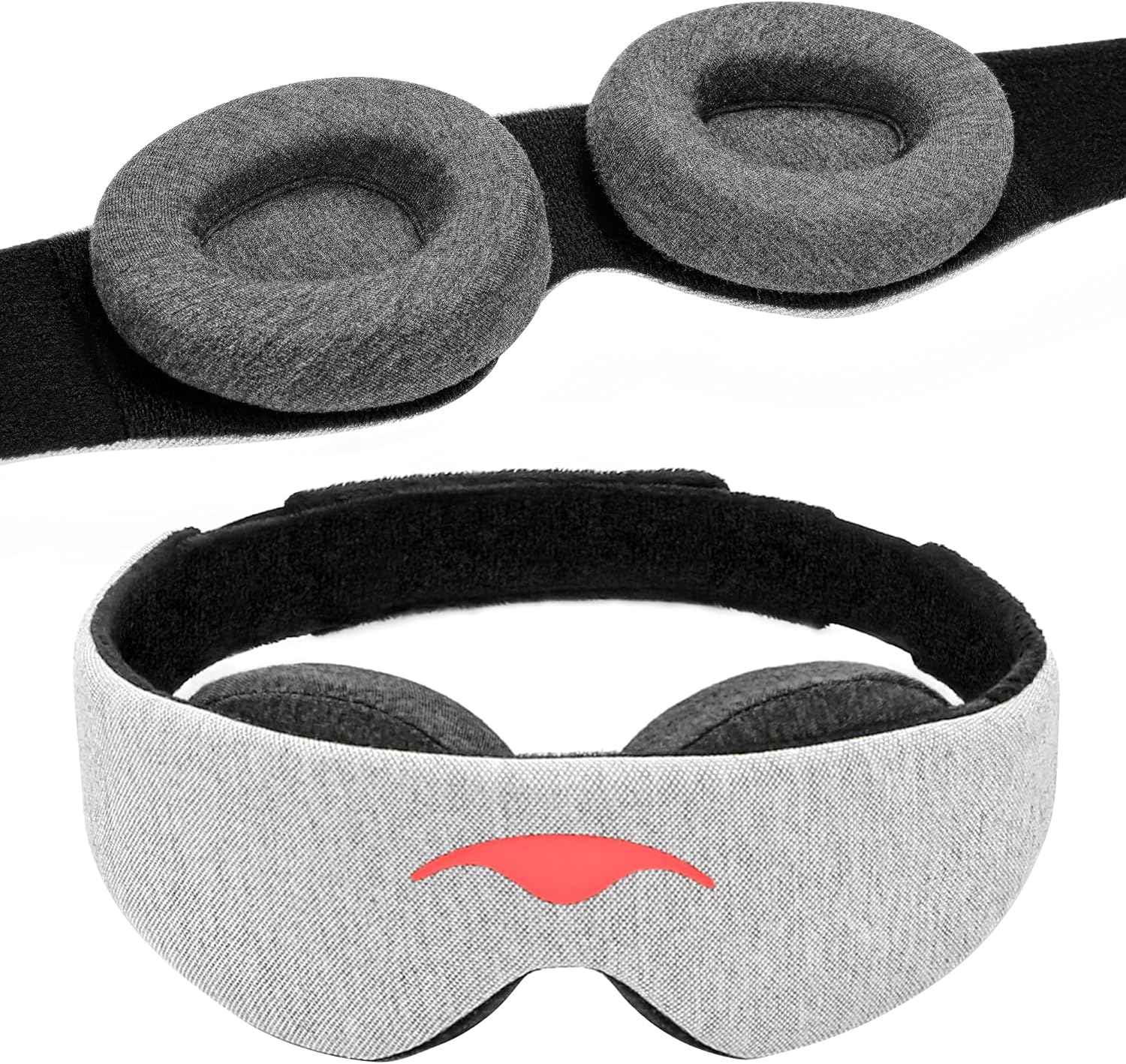
Manta Original Sleep Mask, Maximum Blackout, Adjustable with Detachable Eye Cups, Zero Eye Pressure
Adjustable blackout sleep mask with detachable repositionable eye cups that create total darkness without pressing on eyelids.
Check price on Amazon
DONAMA Cervical Contour Memory Foam Pillow for Neck and Shoulder Pain
Ergonomic contour pillow with memory foam shaped to support the neck and shoulders for all sleep positions.
Check price on AmazonTwo honest starting points. No pressure toward either one.

Everything I write comes from one idea: build a life you own, one stream at a time.
Want me to show you exactly how I do it, step by step, in your language? This is where it starts.
Come build with meMore in this lane.
MAKE Wellness Peptides Review: What They Are and What Nine Months Changed
A nine-month MAKE Wellness peptides review: what the ingredients actually are, what the research supports, oral vs injectable safety, and what changed.
Peptide Supplements: What the Research Actually Says (And What I Found Out)
Peptide supplements are not one thing. Here is what the human evidence actually supports, what is still animal-study territory, and what nine months on a naturally-derived blend looked like.
Peptides for Skin: What the Research Says About Topical vs. Oral
Peptides for skin signal collagen production. Topical serums work on the barrier, oral collagen reaches the dermis through blood. Both have RCT data.

Get the next post in your inbox.
One email when there is something new worth reading. Writing on health, income, and the practical reality of building a life on your own terms. No spam. Easy to leave at any time.
Unsubscribe with one click, any time. Your email stays with me and Kit, my email provider. · Privacy policy
I also publish on Substack: different essays, written for the inbox, the same long game.
Also on Substack