I Thought I Was a Heavy Sleeper: Turns Out I Was Just Sleeping Badly
I slept twelve hours and still woke up exhausted, so my friends lied about the time to get me to flights. Long sleep is not the same as deep sleep.
May contain affiliate links; I may earn a commission at no extra cost to you. Everything here is my opinion, not medical advice. Full disclosures
For years, my friends lied to me about what time it was. On purpose. It was the only way to get me anywhere.
I was the one who slept too much and could never wake up, the one everybody waited on, the reason a group ran late. During my dance career that stopped being a personality quirk and became a logistics problem. We had early flights to catch and call times to make, a whole company meeting at one spot at one hour, and if they told me the real time I simply would not be there. So they stopped telling me the real time. They would say we were leaving at six when we were leaving at eight, tell me to be downstairs an hour or two before we actually needed to move, and that padding was the only thing that got me to the airport with everyone else. An entire troupe of dancers made their flights by lying to me about the clock. I laugh about it now. For most of my life it was just true: I slept long, I slept badly, and I could not get myself up to save my life.
I called myself a heavy sleeper and wore it almost like a fact about my body, ten, eleven, twelve hours when I could get them, and still waking up tired, dragging, treating the morning like something to be survived. I assumed the exhaustion meant my body needed all those hours. "I must have really needed that," I would think, after sleeping half a day and still feeling hollow. It took me an embarrassingly long time to consider the obvious: that I was not getting too little sleep. I was getting too little rest. Long sleep, shallow sleep. Hours in bed standing in for quality I was never actually reaching. The deep, restorative part of the night, the part that does the real work, I was barely touching.
What changed it was not discipline or a new alarm clock. It was paying attention to my sleep the way a dancer pays attention to a body: as an instrument that has to perform, not a thing you just own. I started reading the actual science on recovery and sleep architecture, and somewhere in that I added RESTORED, the bioactive-peptide sleep formula I take every night. And the unexpected thing, the thing I tell people about now, is that as the nights got deeper, I started needing fewer of them.
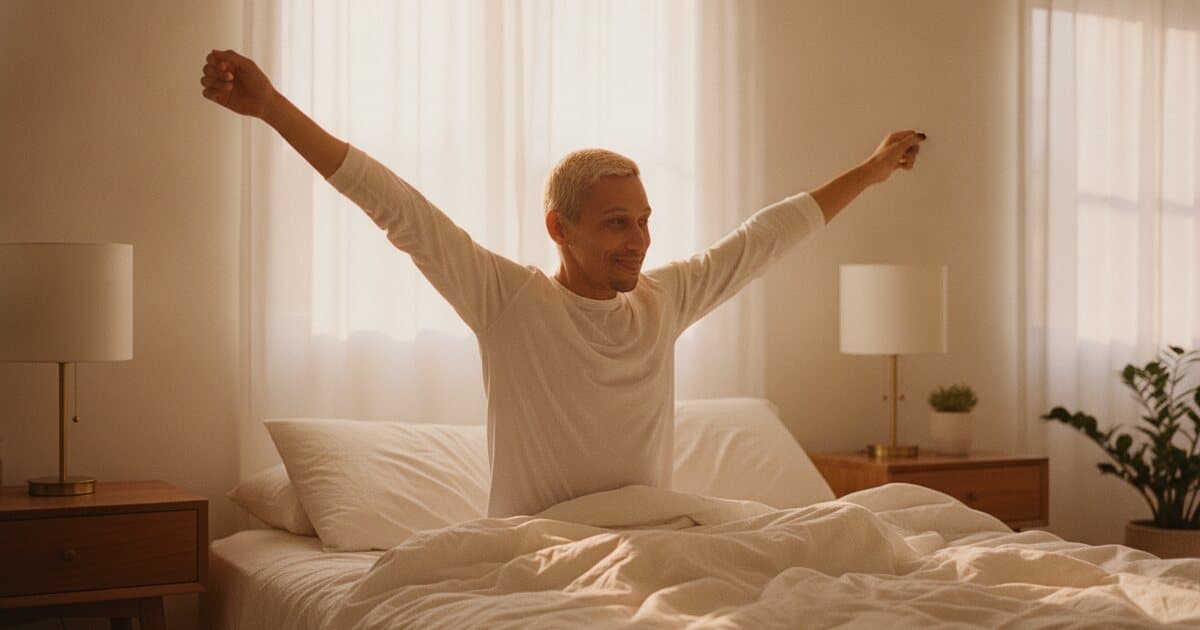
That still sounds backwards when I say it out loud. Better sleep, less sleep. But once I felt it, it made complete sense. I go to bed around ten now and I am up at five or six on my own, no alarm fighting me, rested and clear and in a genuinely good mood before I even made breakfast. Fewer hours, and more recovered by them. I was never short on sleep. I was short on the deep kind.
I think about the version of me my friends had to lie to, and I do not feel embarrassed for him anymore. He was not lazy. He was running on a tank that looked full and never was. If any of this sounds like your mornings, long nights, slow wakes, that survived-it feeling at the start of every day, the thing worth questioning is not how much you sleep. It is how deep. That is what actually changed things for me.
If you are not sure whether deep sleep is your missing piece or something else, a short wellness quiz walks through how you sleep, eat, and recover, and points you at where to start.

Brazilian-Canadian on Vancouver Island. Former ballet artist, current builder of small ventures. Posts here cover health, income, and the long game.
FAQ
What is the difference between long sleep and deep sleep?
Long sleep is hours in bed. Deep sleep is the restorative part of the night that actually does the work. For years I had plenty of the first and almost none of the second, which is why I could sleep twelve hours and still wake up exhausted.
How can better sleep mean needing fewer hours?
When the nights got deeper, the hours started counting for more. I went from ten to twelve shallow hours to going to bed around ten and getting up on my own at five or six without an alarm. I was never short on sleep. I was short on the deep kind.
What is RESTORED and where does it fit in?
RESTORED is the bioactive-peptide sleep formula I take every night. It is one part of what changed for me, alongside actually reading the science on recovery and sleep architecture and treating sleep as an instrument, not a thing I just own. One person's experience, not a promise.
How do I know if deep sleep is my missing piece?
If your nights are long, your wakes are slow, and every morning feels like something you survived, the number worth questioning is not how much you sleep but how deep. A short wellness quiz walks through how you sleep, eat, and recover and points you at where to start.
Small upgrades to your wellbeing and lifestyle. Simple, well-reviewed items to support your journey. As an Amazon Associate I earn from qualifying purchases, at no extra cost to you.
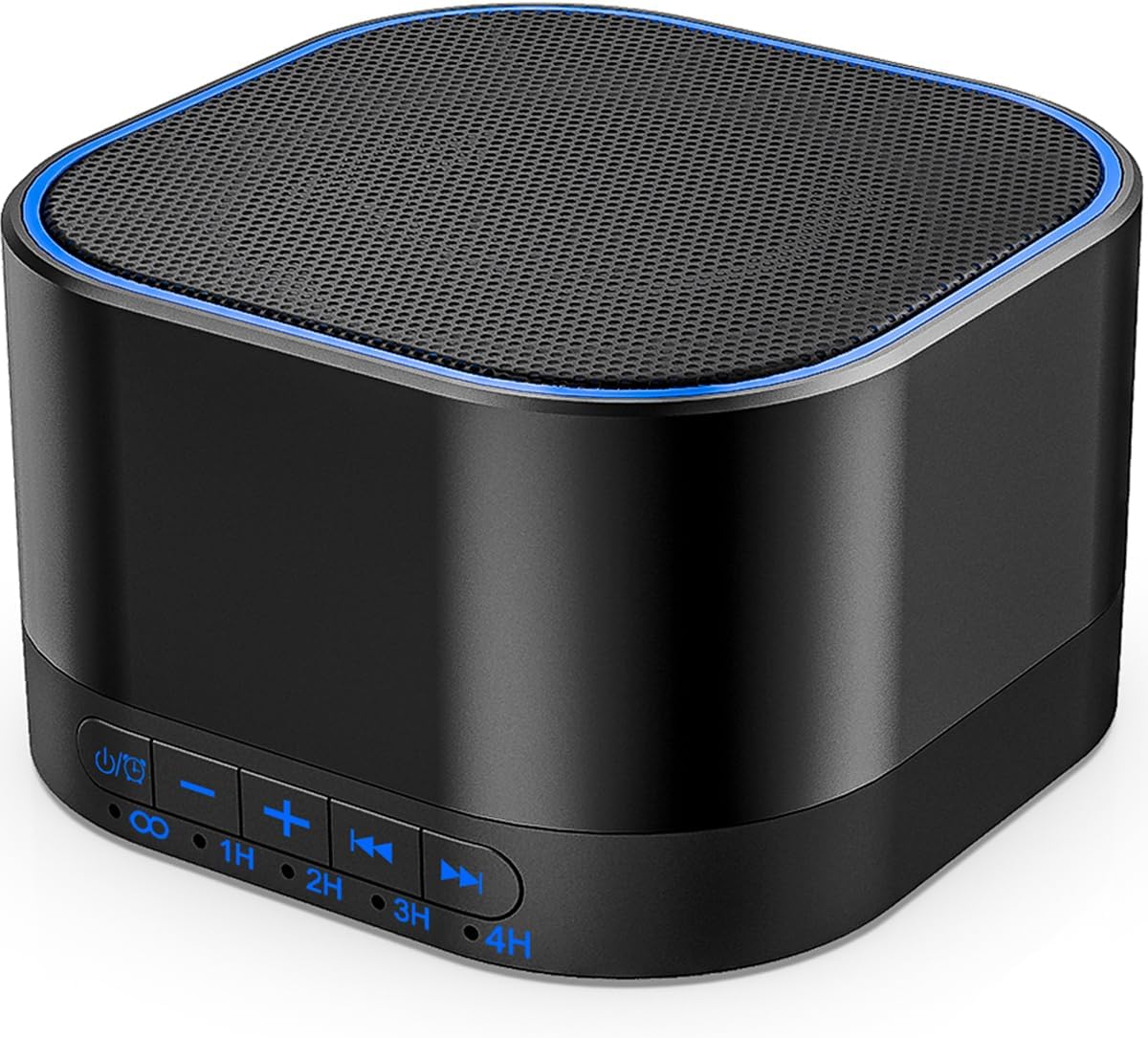
Magicteam White Noise Sound Machine with 20 Non-Looping Natural Sounds
Compact desktop sound machine with 20 non-looping nature and white noise tracks, adjustable volume, and sleep timer.
Check price on Amazon
ProsourceFit Acupressure Mat and Pillow Set for Back and Neck Pain Relief
Cotton-covered foam mat and neck pillow set with thousands of acupressure points for back and neck tension relief and post-workout recovery.
Check price on Amazon
Ally Peaks Multi-Grip Doorway Pull-Up Bar, Max 440 lbs
Heavy-duty doorway pull-up bar with multiple grip positions and 440 lb weight capacity, no screws needed.
Check price on AmazonTwo honest starting points. No pressure toward either one.

Everything I write comes from one idea: build a life you own, one stream at a time.
Want me to show you exactly how I do it, step by step, in your language? This is where it starts.
Come build with me
Curious about Bioactive Precision Peptides, but not sure where to start?
Take the free 2-minute Wellness Quiz. It reads your answers and shows you where and how Natural Bioactive Precision Peptides could support your wellbeing.
Take the 2-minute quizMore in this lane.
A Little Bit of Data
An Apple Watch I got for other reasons showed me what my body already knew about RESTORED and my sleep. I cannot prove a thing.
Why Am I Always Tired? The Answer, From a Former Dancer
Tired all the time even when you sleep? The cause is usually not one thing. What drains your energy, why caffeine makes it worse, and what helped me.
Best Peptides for Sleep Quality: What the Research Actually Shows
The three most studied peptides for sleep work on different mechanisms. Here is what the research supports, what it does not, and where a no-needle option fits.

Get the next post in your inbox.
One email when there is something new worth reading. Writing on health, income, and the practical reality of building a life on your own terms. No spam. Easy to leave at any time.
Unsubscribe with one click, any time. Your email stays with me and Kit, my email provider. · Privacy policy
I also publish on Substack: different essays, written for the inbox, the same long game.
Also on Substack