Peptides for Weight Loss: The Two Very Different Things That Phrase Means
Search peptides for weight loss and two worlds tangle: injectable GLP-1 drugs, and the food-derived peptides I take. The difference, and the muscle catch.

May contain affiliate links; I may earn a commission at no extra cost to you. Everything here is my opinion, not medical advice. Full disclosures
Half the people typing "peptides for weight loss" into a search bar are picturing a needle. The other half are picturing a capsule. Almost nobody has been told those are two different universes, and that the word "peptide" is the only thing they share. I have spent the last while in the quieter of the two.
"Peptides for weight loss" is one phrase doing the work of two completely separate conversations, and the confusion between them is costing people either money or muscle, sometimes both. On one side are the injectable drugs, semaglutide, tirzepatide, the names behind Ozempic, Wegovy and Mounjaro. On the other side are food-derived bioactive peptide supplements, the kind I take, sold on a shelf next to the vitamins. Both are technically peptides. So is the protein in your breakfast. That shared word is hiding a difference as wide as the one between a prescription and a smoothie.
Key Takeaways
Small upgrades to your wellbeing and lifestyle. Simple, well-reviewed items to support your journey. As an Amazon Associate I earn from qualifying purchases, at no extra cost to you.

Fit Simplify Resistance Loop Bands, Set of 5
Five graduated latex loop bands for home workouts, stretching and physical therapy, with a carry bag.
Check price on AmazonThe two things hiding inside one search
Start with the drugs, because they are the reason the phrase is everywhere right now. GLP-1 medications like semaglutide and tirzepatide really are peptides, short chains of amino acids, engineered to mimic a gut hormone your body releases after a meal. They tell the brain you are full and slow how fast the stomach empties, and they do it powerfully enough that appetite can drop away almost entirely. They work. They are also prescription medications, taken under medical supervision, with real side effects and a real cost, and they belong to a doctor's office, not a wellness blog. Circling them is a grey market of "research peptides" sold online with a wink and a "not for human consumption" label.
The other kind is what most people do not realize they are also searching for. Food-derived bioactive peptides are short amino-acid chains released from ordinary foods, fava bean, a yeast protein, rice protein and others, that the body already recognizes as signalling instructions. They are sold as supplements because that is what they are: concentrated, food-derived nutritional support, not pharmaceuticals. If the whole idea of a peptide is fuzzy, I wrote the plain-language version of the category in Your Body Is Having 7,000 Peptide Conversations Right Now, and it is worth ten minutes before you spend a dollar on either side of this.
One of these is pharmacology and the other is nutrition. One overrides a system; the other supports one. Treating them as the same thing is how people end up either expecting a supplement to work like a drug, and feeling cheated when it does not, or fearing a supplement as if it were a drug, which is just as confused in the other direction.

Not sure which peptide fits you?
A couple of quick questions and the free quiz shows you where Bioactive Precision Peptides could support your wellbeing.
Take the 2-minute quizWhat the injectables actually do, and the part the before-and-after photos skip
For some people the GLP-1 drugs are genuinely life-changing, and the appetite quiet they deliver is something no supplement on Earth can match.
When you lose weight fast on aggressive appetite suppression, a meaningful share of what comes off is not fat, it is lean mass. Muscle, and over a long enough run, bone. The figures that get cited in the research land somewhere around a quarter to forty percent of total weight lost coming from lean tissue when nothing is done to protect it. The scale rewards you. The body underneath can quietly get weaker.
For someone in their twenties that is a footnote. For someone near forty, I am almost there, and I trained as a dancer for most of my life, so my body keeps score, it is close to the worst trade you can make. Muscle is roughly a third of your body weight, it is most of what keeps your metabolism running, and it is the difference between aging into someone capable and aging into someone careful. Giving it away to move a number on a scale is a deal you regret later, even if it photographs well now. This is exactly why the better medical conversations around these drugs now come bundled with the same advice every time: keep your protein high, and lift something heavy, so the weight you lose comes off the right place. If you go the injectable route, guard your muscle like it is the asset. It is.
Small upgrades to your wellbeing and lifestyle. Simple, well-reviewed items to support your journey. As an Amazon Associate I earn from qualifying purchases, at no extra cost to you.

Owala FreeSip Insulated Stainless Steel Water Bottle with Straw, BPA-Free, 32 oz
Larger 32 oz version of the FreeSip with the same dual-sip lid, double-wall insulation, carry-loop lock, and cup-holder-compatible base.
Check price on AmazonBut what does a skinny ex-ballerina know about weight loss?
I can hear it, because I would think it too: what does this skinny bitch former ballerina know about weight loss? Fair. The answer is, not much, not about the version most people mean. I was never overweight, never carried the kind of weight that quietly reorganizes a life. Not after a career in white tights that hid absolutely nothing. If that is your fight, I respect it more than my own.
A career like ballet, like any sport trained at that volume, holds your body in a shape that has almost nothing to do with willpower and almost everything to do with the four to six hours a day you spend under load. Take that away, the way mine was taken in 2013 when my career ended, and the body recomposes fast: the lean muscle all that training maintained starts to leave, the daily furnace that came with it goes quiet, and weight settles in places it never used to. My struggle was a smaller one than a lot of people's. It was still real, and it was real against the only body I had ever known.
Then comes the part none of us outrun: the chapter I am now firmly in, the one politely called getting older. Somewhere in your thirties the body begins shedding lean muscle on its own, a few percent a decade that picks up speed if you ignore it, and since muscle is most of what keeps your metabolism awake, less of it means the same plate of food lands differently than it did at twenty-five. Stack the detraining of a finished athletic career on top of ordinary aging and you get a real, unglamorous shift.
So no, I did not arrive here from obesity. I arrived from the other door: watching a body that a whole life of training built quietly start to hand itself back. That is exactly why the muscle side of this is the part I care about most, and why FIT is the non-negotiable in my own routine. It is built to support lean muscle and recovery, the precise tissue both a finished career and a fortyish calendar come for. It does not melt anything, and it is not a drug; it supports the body's own signals around lean mass and healthy body composition while the protein and the resistance training do the real work. Believe this skinny bitch former ballerina, or don't, lol, but the biology of what happens to a trained body when the training stops is not really up for debate.

Get the next post in your inbox.
One email when there is something new worth reading. No spam, leave any time.
The kind I actually take
My own peptides are the quiet shelf, not the needle. I started on MAKE Wellness's line about nine months ago, back when getting it into Canada meant a friend carrying boxes up from Seattle a few at a time, never as much as I wanted, never on a schedule. Since it opened here in the spring I have finally been able to stay consistent, and I became a Canadian affiliate only after the better part of a year as a paying customer. The fuller account of what it did and did not do is in my nine-month review.
For the weight-and-body-composition question specifically, two products carry the load, and they are designed to work as a pair. LEAN is the appetite side, built around a complex called Apticurb Trimfast. It supports the gut-to-brain satiety signal, the "I'm full" message arriving on time instead of three hundred calories too late. It is not a stimulant choking your appetite off; it is a nudge on a conversation your body is already trying to have. What I noticed, over weeks rather than days, was less of the restless afternoon snacking that was never really hunger in the first place.
FIT is the other half, and it is the one that answers the muscle problem the injectables create. Built around Metabolic Matrix and a complex called PeptiStrong, it is aimed at keeping lean muscle responsive and recovery clean, the exact tissue an aggressive cut puts at risk. Leaning out while protecting muscle is the entire game past thirty-five, and running the appetite signal and the muscle signal together is how you keep the loss coming off fat instead of strength. There is a deeper map of the whole seven-product line, and which ones earn a place, in The MAKE Wellness Products, Explained.
This is a nudge, not a melt. It works gradually, it works alongside what you are already doing, and if you are looking for the appetite to simply vanish the way it does on a drug, this is not that. These support the signals around healthy body composition. They do not replace the work.
Small upgrades to your wellbeing and lifestyle. Simple, well-reviewed items to support your journey. As an Amazon Associate I earn from qualifying purchases, at no extra cost to you.
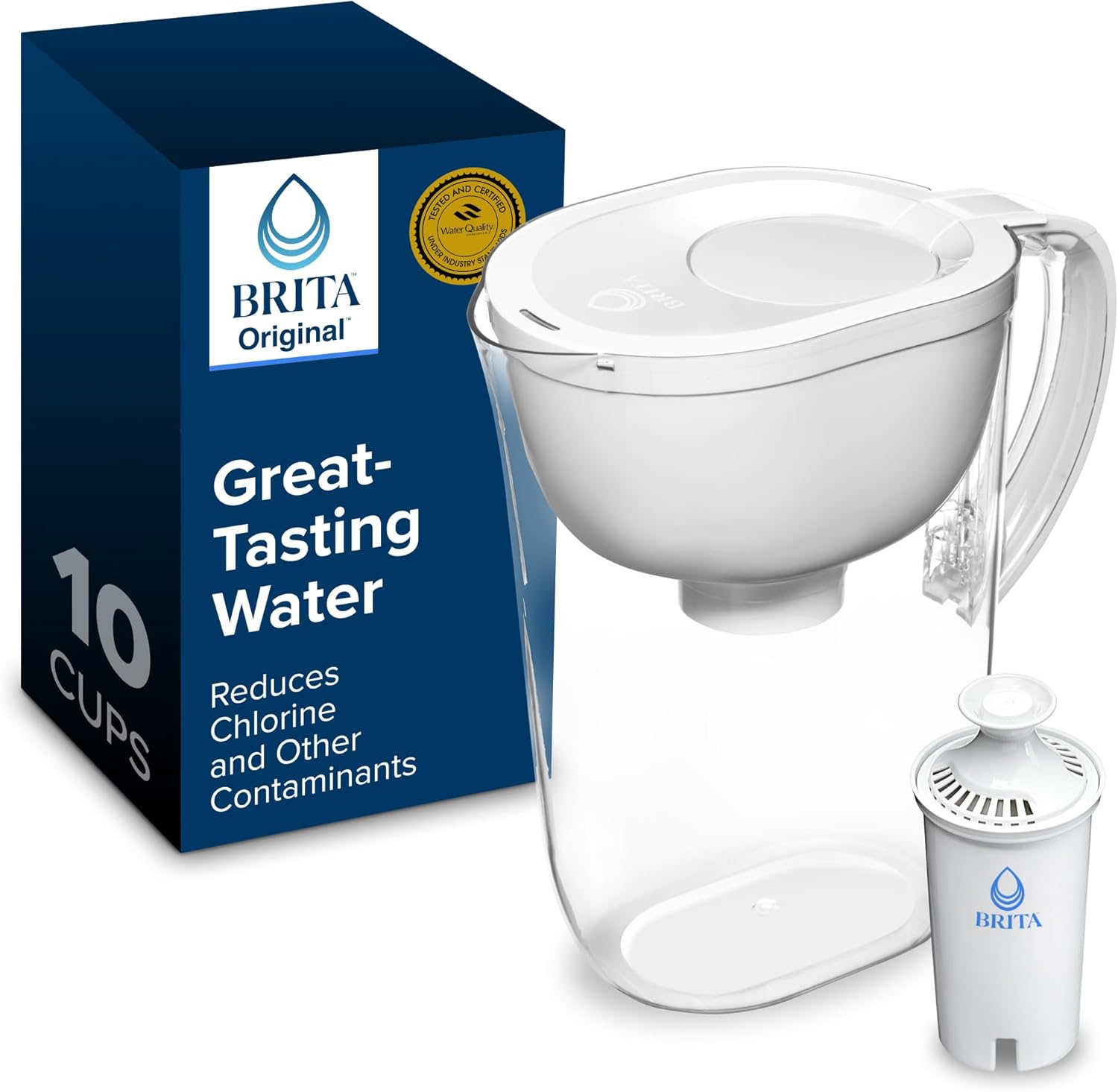
Brita Large 10-Cup Water Filter Pitcher, Made Without BPA, White
10-cup BPA-free water pitcher with a standard filter lasting two months. A Canadian household staple.
Check price on AmazonIf you are starting from the quiet end
The first rule: do not buy the whole shelf. Start with the single signal that is loudest for you. For most people who land on a phrase like "peptides for weight loss," that signal is appetite, which means LEAN is the place to begin, and if you train, or you are past thirty-five and want the loss to come off fat, you pair it with FIT from the start. Two, not seven.
The second rule is to judge it on a fair timeline. Two to four weeks of consistent use, not three days. The appetite side tends to show up first; the body-composition side is a slower, quieter change you notice in a month, not a morning.
If you genuinely do not know which signal is loudest for you, guessing is the expensive option. The sixty-second wellness quiz walks through it and points you at the one or two products that match what your answers actually reveal, instead of the whole catalogue. And the line I take, with a reader discount already built in, is here whenever you have done the reading.
The last rule is the one that outranks every peptide on either side of this. The number on the scale is a lagging indicator of a few hundred small daily decisions, how you slept, what you ate, whether you moved, whether your nervous system ever came down off high alert. A supplement can nudge one or two of those signals in the right direction. A drug can override one of them with force. Neither one runs the others for you. That part has always been, and will always be, the engine, and it is yours.

Brazilian-Canadian on Vancouver Island. Former ballet artist, current builder of small ventures. Posts here cover health, income, and the long game.
FAQ
Do peptides actually work for weight loss?
It depends entirely on which kind you mean. The prescription GLP-1 injectables (semaglutide, tirzepatide) work powerfully on appetite and are genuinely effective for weight loss under medical supervision, with the well-documented caveat that a large share of the weight lost can be muscle unless protein and resistance training protect it. Food-derived bioactive peptide supplements work more gently, supporting the body's own appetite and body-composition signals as a nudge alongside diet and training, not as a standalone fat-burner.
Are MAKE Wellness peptides the same as Ozempic or other GLP-1 drugs?
No. GLP-1 drugs like Ozempic are prescription medications that mimic a gut hormone to suppress appetite. MAKE Wellness products are food-derived bioactive peptide supplements that support the body's own signalling. Different category, different mechanism, different setting, a doctor's office versus a supplement shelf. They are not interchangeable, and one is not a cheaper version of the other.
Which MAKE Wellness product is for weight loss?
It is two working together rather than one. LEAN supports the appetite and satiety signal, the Apticurb Trimfast complex helping the "I'm full" message land on time. FIT protects lean muscle while you lean out, built around Metabolic Matrix and PeptiStrong, so the weight you lose comes off fat instead of strength. HYDRATED sits underneath so the rest can actually work. None of them is a weight-loss drug; they support the signals around healthy body composition.
Will peptide supplements make me lose muscle the way GLP-1 drugs can?
The muscle loss tied to the injectables comes from very aggressive, fast appetite suppression with nothing protecting lean tissue. Food-derived supplements are not doing that kind of override, and FIT is specifically aimed at keeping muscle responsive. Either way, the real protection is the same on any path: eat enough protein and do some resistance training, so the weight you lose comes off fat rather than the muscle you want to keep.
How long before I notice anything from the supplement kind?
Two to four weeks of consistent daily use is a fair window. The appetite side tends to show up first, less restless snacking, with body-composition changes following more slowly over a month or two. Three days is not enough information to judge anything, and these are not built to be felt like a stimulant.
Small upgrades to your wellbeing and lifestyle. Simple, well-reviewed items to support your journey. As an Amazon Associate I earn from qualifying purchases, at no extra cost to you.

Etekcity Digital Kitchen Scale, Grams and Oz, 304 Stainless Steel, LCD Display
Stainless steel digital kitchen scale with LCD display measuring grams, ounces, and millilitres.
Check price on Amazon
DAVIDsTEA Only the Best 8-Tea Loose Leaf Sampler, 48 Servings in 8 Premium Tins
Eight of DAVIDsTEA's top blends each in its own premium tin, 48 servings total, sold directly by the Canadian brand on amazon.ca.
Check price on Amazon
Marce Matcha Whisk Set - Matcha Whisk and Bowl, Sifter, Holder and Scoop (Pink)
5-piece ceramic and bamboo matcha prep kit with bowl, 100-prong whisk, sifter, holder, and scoop.
Check price on AmazonTwo honest starting points. No pressure toward either one.

Everything I write comes from one idea: build a life you own, one stream at a time.
Want me to show you exactly how I do it, step by step, in your language? This is where it starts.
Come build with meMore in this lane.
Peptides and Ozempic: Same Word, Different Worlds
My cousin in Brazil, who takes Mounjaro, asked if my wellness sachet was a cheaper Ozempic. Here is what each one actually is.
What Are Peptides? Your Body Is Having 7,000 of These Conversations Right Now
What are peptides? Short amino-acid chains your body uses to signal sleep, appetite, recovery, focus, and calm. A plain-language guide to what they are and how they actually work.
Peptide Supplements: What the Research Actually Says (And What I Found Out)
Peptide supplements are not one thing. Here is what the human evidence actually supports, what is still animal-study territory, and what nine months on a naturally-derived blend looked like.

Get the next post in your inbox.
One email when there is something new worth reading. Writing on health, income, and the practical reality of building a life on your own terms. No spam. Easy to leave at any time.
Unsubscribe with one click, any time. Your email stays with me and Kit, my email provider. · Privacy policy
I also publish on Substack: different essays, written for the inbox, the same long game.
Also on Substack