Three or Four Hours a Week, and Someone Gets to Go Home
The Red Cross Health Equipment Loan Program runs on volunteers, and it asks for about three or four hours a week. No experience needed. Here is what the work is, the reasons people talk themselves out of it, and how to start.
The people I admire most were not talked into the good things they do. They got a clear enough look at what was being asked, recognized themselves in it, and said yes.
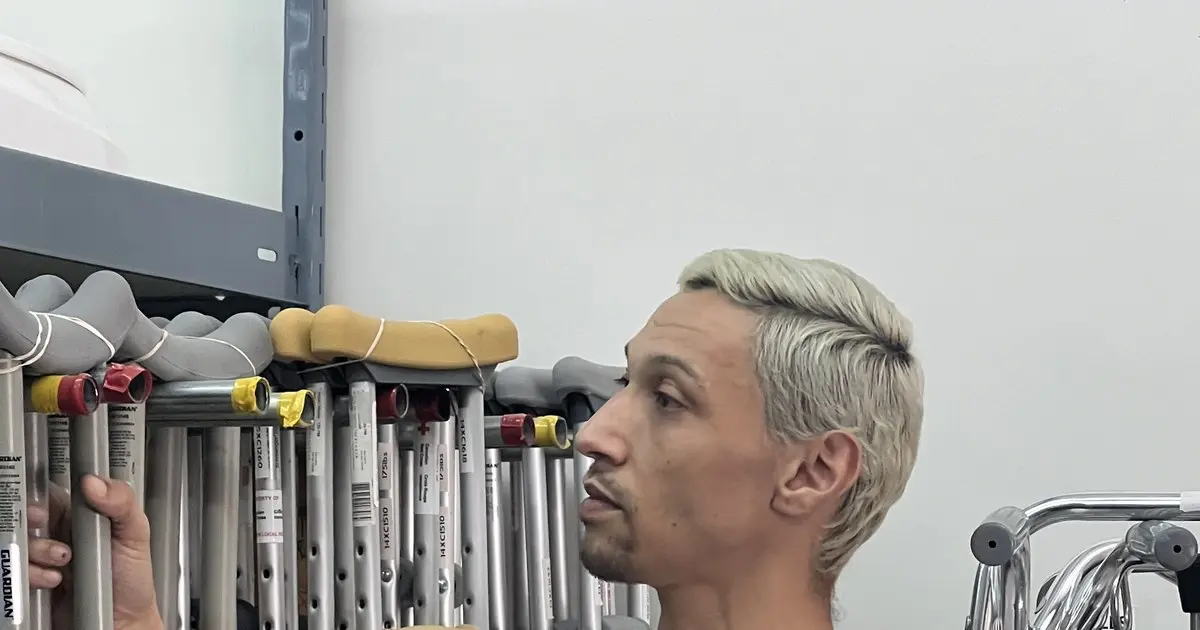
I work full time as a Medical Equipment Technician with the Canadian Red Cross, paid staff on the repair bench. But the program I work inside, the Health Equipment Loan Program (HELP), the one that lends out wheelchairs and walkers and hospital beds so people can recover at home after surgery or illness, runs on volunteers.
What the work actually is
The program needs three kinds of help, and only one of them goes anywhere near a wrench. There are technician volunteers, who clean and repair the equipment, which is the part I do. There are delivery volunteers, who get equipment to where it has to be. And there are client services volunteers, who answer the phone, match a person to the right equipment, walk them through using it, and keep the records straight so the next person gets what they need.
You do not need medical training. You do not need any prior experience at all. The Red Cross trains you for the role on purpose, because they would rather teach a willing person than screen for a credential. The time it asks for is modest and specific: generally three or four hours a week, a morning or an afternoon, mostly weekdays, with some evening and Saturday shifts where they are needed. You have to be sixteen.


Get the free Already Viral Starter Kit
The four steps I used to recreate my first viral video with AI: pick a format that already went viral, score it, choose a twist and brief your first recreation in 10 minutes. After that, my newsletter: news, offers and updates by email from Vlad Pereira. You can unsubscribe at any time. Privacy policy
The reasons people give for not
I know the reasons because I have used most of them myself, about one thing or another.
"I do not have the time." Almost no one does, in the sense of having it sitting around spare. But three or four hours a week barely dents an afternoon, and the schedule bends to fit your life instead of asking your life to bend to it.
"I do not have the skills." Client services needs a kind phone manner, some patience, and enough care to enter information correctly so the right chair reaches the right person. Delivery needs you to be reliable. The technician bench needs you to be willing to learn, and they teach you the rest. None of that is rare. You very likely already have it.
"I am afraid it will be heavy, or that I will be guilted into giving more." It is not, and you will not be. The work is calm, practical, and bounded. You do your shift, you do it well, you go home.
Who it is for, and who it is not
If your life has no margin in it right now, none at all, then this is not your season, and that is not a failing. Look after your own first. There is no shame in it.
But if you have a few hours and a quiet sense that you would like some part of your week to land on someone other than yourself, this is one of the simplest ways I know to do exactly that. You will not fix the world in an afternoon. You will help one real person keep a little of their independence, and then another. It runs on the same instinct as the ballet I have produced for the Red Cross, only lighter and closer to home.
If it turns out to be a yes
The Health Equipment Loan Program is looking for volunteers all across British Columbia and Yukon, in the big cities and the small towns both, including the one I live in. You can read the role and apply directly. If it is a yes, you will feel it, the same way I did. And if it becomes one of those commitments that stays with you when you are off the clock, you will have found something most people spend years looking for.

Vlad Pereira is an artist first: a former professional ballet dancer who now works as a digital artist, graphic designer, and web and systems developer in Courtenay, British Columbia. A principal dancer with the Goh Ballet from 2009 to 2013, he designs projected backdrops for dance and theatre, builds websites for small businesses through his studio, Vlad Pereira Online, and writes practical guides to AI tools for small business owners.
FAQ
Do volunteers work directly with patients or clients?
Client services volunteers do speak with clients - by phone, walking them through equipment use and intake. Delivery volunteers drop equipment off. Technician volunteers stay at the repair bench and rarely interact with recipients directly. You can pick the role that fits how you want to show up.
What happens if I can only commit short-term?
I do not know the Red Cross's policy on short-term commitments, so I would ask them directly when you apply. What I can say is the schedule is described as flexible - built around your availability, not the other way around.
Is the equipment heavy, and do I need to lift?
Delivery obviously involves some physical handling - wheelchairs, walkers, hospital beds. Technician and client services work is bench-level and desk-level. If lifting is a concern, client services is the natural fit. The application process is the right place to flag it.
Does this program operate outside British Columbia?
The post specifically calls out BC and Yukon as where the Health Equipment Loan Program is actively recruiting. The Canadian Red Cross runs programs nationally, but I can only speak to this specific role in this specific region - check redcross.ca for what exists near you.
Can someone under eighteen actually volunteer here?
Yes - the minimum age is sixteen, which the program states outright. That is worth knowing if you have a teenager looking for something grounded and genuinely useful, or if you are close to that age yourself and wondering whether it counts.
More in this lane.
The Quiet Work Behind a Borrowed Wheelchair
I am a Medical Equipment Technician for the Red Cross HELP program. Before a borrowed wheelchair reaches the person who needs it, it comes to my bench. Here is what that quiet, unglamorous work actually looks like, and why it matters.
A Breath of Fresh Air
A family sent our local Red Cross a thank-you card after two hard months with a hospital bed. They could not remember my name, but they remembered how I made them feel. On the quiet satisfaction of helping your community with whatever you have.
The Work I Catch Myself Thinking About on My Days Off
I am a Medical Equipment Technician for the HELP program of the Canadian Red Cross, and the strangest, best sign of how much I love it is that I think about it when I am not even there.
 Free with the newsletter
Get the free Already Viral Starter Kit
The four steps I used to recreate my first viral video with AI: pick a format that already went viral, score it, choose a twist and brief your first recreation in 10 minutes. After that, my newsletter: what I am building, what I am learning, and the practical side of running small ventures beside a full-time job, plus news, offers and updates.
Free PDF, 14 pages, fillable. News, offers and updates by email from Vlad Pereira. You can unsubscribe at any time. I send the newsletter with Kit and Substack, so they keep your email too. · Privacy policy
I also publish on Substack: different essays, written for the inbox, the same long game.
Also on Substack