How to Stop Sugar Cravings Without White-Knuckling It
Most cravings are not hunger or weak willpower, they are a mistimed signal. What drives the afternoon sugar pull, the free fixes, and what helped me.
May contain affiliate links; I may earn a commission at no extra cost to you. Everything here is my opinion, not medical advice. Full disclosures
Dancers have a complicated relationship with food, and the healthy ones I learned from did not win it with punishment. They learned to read the difference between real hunger and a craving, because a craving is usually the body asking for something it is not actually naming. The afternoon pull toward sugar is rarely about sugar, and you almost never beat it with willpower.
If you hit the same wall every afternoon and lose it to a craving you swore you would resist today, the problem is not your character. A craving is a signal, and most of the time it is a mistimed or mislabelled one. Your body is asking for energy, or rest, or water, or just the comfort of a familiar habit, and sugar is the fastest answer in reach. Once you see cravings as information instead of a moral test, they get a great deal easier to handle, and a few of the fixes are almost embarrassingly simple.
Key Takeaways
Small upgrades to your wellbeing and lifestyle. Simple, well-reviewed items to support your journey. As an Amazon Associate I earn from qualifying purchases, at no extra cost to you.
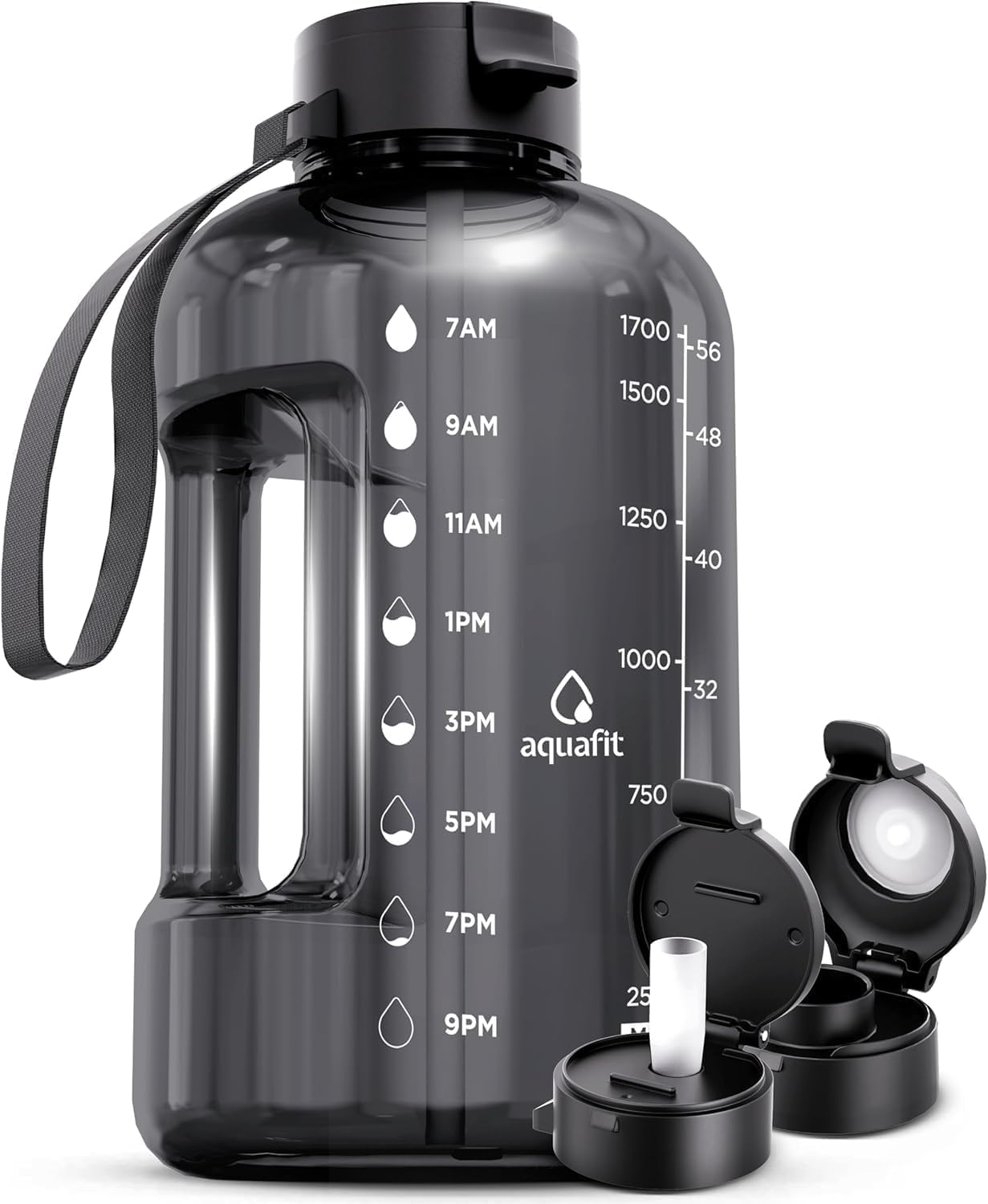
AQUAFIT 2L Water Bottle with Time Markers and Dual Lids
Half-gallon BPA-free bottle with printed time markers and two interchangeable lids to track daily water intake.
Check price on AmazonA craving is a signal, not a hunger
The first useful move is to stop treating every urge to eat as hunger. True hunger builds slowly, is open to a real meal, and is patient. A craving arrives fast, is specific, usually points at sugar or salt, and feels urgent. That difference is the tell. A craving is your body using the fastest language it has to ask for something else entirely. The most common things it is actually asking for are energy because you are tired, calm because you are stressed, water because you are mildly dehydrated, or simply the next step in a habit loop your brain has rehearsed a thousand times at the same hour.
A dancer learns to ask the second question instead of obeying the first. Not "what do I want to eat," but "what is my body actually short on right now." The answer is often sleep or water or a real meal you skipped, and once you give it the real thing, the craving for the fake thing fades without a fight.

Not sure which peptide fits you?
A couple of quick questions and the free quiz shows you where Bioactive Precision Peptides could support your wellbeing.
Take the 2-minute quizI came to this the long way
I did not learn any of this because I was the disciplined one. I learned it because I was the opposite. In a room full of dancers with careful, complicated relationships with food, I was the cautionary tale. I ate absurd amounts of steak, more candy than a grown man should admit to, and I drank pop like it was a food group. My friend and longtime dance partner Danielle was the living rebuke to all of it. She is vegan, forever grazing on something green and sensible and frankly a little boring, and standing next to her I did not look bad, I looked like the before photo.
The food was only half of it. The other half was energy, and the gap there was almost comical. Danielle never stopped. Tesla should have studied whatever she ran on and put it in their batteries, because that girl was never down. I was always down. I spent a real part of my early dance years asleep on the floor. When there were rehearsals I was not in, rather than watch them I would slip onto the balcony of Studio 1 at the Goh Ballet, lie down on the ground, and nap while the music played below.

It took me years to connect the two halves. The steak was just excess. The real problem was the candy and the pop, all that sugar spiking me and then dropping me, and every drop sent me looking for the floor and for more sugar to climb back out of it. Danielle was not running on willpower. She just was not strapped into the rollercoaster I had built for myself. The cravings I had decided were part of my personality were mostly the predictable aftermath of how I ate.
Get the next post in your inbox.
One email when there is something new worth reading. No spam, leave any time.
Small upgrades to your wellbeing and lifestyle. Simple, well-reviewed items to support your journey. As an Amazon Associate I earn from qualifying purchases, at no extra cost to you.

Stanley Quencher H2.0 FlowState Tumbler with Straw, 40 oz, BPA-Free, Insulated Stainless Steel
Vacuum-insulated stainless steel tumbler with a 3-position FlowState lid, ergonomic handle, and a narrow base that fits most car cup holders.
Check price on AmazonThe free fixes that actually work
Start with protein, because it is the single most effective lever most people ignore. A breakfast and lunch with real protein keep you full and steady, and they flatten the blood-sugar swings that manufacture afternoon cravings out of nothing. Do not skip meals into a crash, because hunger you postpone comes back as a craving you cannot reason with. Sleep, because a tired body chases quick energy all day and sugar is the quickest. Drink water before you reach for food, since thirst disguises itself as appetite more often than people believe. And name your habit loops, the three o'clock treat, the something-sweet-after-dinner reflex, because a craving attached to a time or a feeling is a rehearsed pattern, and patterns can be rewritten once you see them.
None of that requires buying anything, and all of it outperforms willpower, because willpower spends energy fighting the signal while these fixes remove the reason the signal is firing.
Where appetite support fits
After the basics, there is one thing I use. MAKE Wellness LEAN is a bioactive peptide supplement formulated to support appetite signalling, the gut-to-brain conversation that tells you that you have had enough, so it lands on time rather than three hundred calories too late. It is not a stimulant appetite suppressant, and that distinction is the reason I was willing to use it. What I noticed over months, not days, was less of the restless afternoon snacking that was never really hunger in the first place. I broke down how it and the rest of the line are built in The MAKE Wellness Products, Explained.
It supports a signal you already have, it does not override your appetite or replace eating well, and it did nothing on the days I slept badly and stress-ate, because those were a different problem. The one I use is here, discount built into the link, and I paid full price for it for almost a year.
Small upgrades to your wellbeing and lifestyle. Simple, well-reviewed items to support your journey. As an Amazon Associate I earn from qualifying purchases, at no extra cost to you.

FORLIFE Brew-in-Mug Extra-Fine Tea Infuser with Lid
Stainless steel fine-mesh basket infuser with a silicon-rimmed lid that flips to serve as a drip tray.
Check price on AmazonIf it is really about weight
Cravings and weight are related but not the same conversation, and the weight one is full of distinctions the ads skip. If that is where you actually are, I wrote about it in Peptides for Weight Loss, including the two very different things that phrase is used to mean. And if you are not sure whether your loudest problem is appetite, sleep, energy, or stress, a short wellness quiz walks through your real patterns and points you at one place to start.

Brazilian-Canadian on Vancouver Island. Former ballet artist, current builder of small ventures. Posts here cover health, income, and the long game.
FAQ
Why do I crave sugar so badly in the afternoon?
Usually because of a blood-sugar dip from a low-protein lunch or a skipped meal, tiredness from poor sleep, or a rehearsed habit attached to that time of day. Your body wants fast energy and sugar is the quickest source within reach. It is rarely a true need for sugar, which is why answering the real cause, food, rest, or water, quiets the craving better than resisting it does.
How do I stop sugar cravings without just using willpower?
Remove the reasons they fire instead of fighting them. Eat enough protein at breakfast and lunch, stop skipping meals into a crash, sleep properly, drink water before reaching for a snack, and notice the habit loops tied to a time or a feeling. Willpower spends energy resisting the signal, while these fixes turn the signal down at the source, which is far less exhausting and far more durable.
What does MAKE Wellness LEAN do?
LEAN is a bioactive peptide supplement formulated to support appetite signalling, the gut-to-brain conversation that tells you that you are full, so it arrives on time rather than after you have overeaten. It is not a stimulant appetite suppressant. In my own use it showed up as less restless afternoon snacking over a span of months, layered on top of eating well, not as a replacement for it.
Is craving sugar a sign of something wrong?
Usually it is a sign of an ordinary mismatch: too little protein, too little sleep, mild dehydration, stress, or a strong habit. Those are common and fixable. Persistent, intense cravings paired with other symptoms can occasionally point at something medical worth checking, and patterns of bingeing or loss of control around food are a separate, serious matter that deserves real professional support rather than a supplement.
Why do I keep eating past full?
Because the fullness signal travels slower than the urge to eat. It takes time for your gut to tell your brain you have had enough, so if you eat fast, you can pass the point of satisfied before the message arrives. Eating slowly, leading with protein, and pausing partway through a meal all give the signal time to catch up, which is the same conversation appetite-signalling support is meant to help land on time.
Do appetite supplements actually work?
It depends entirely on what they claim. Stimulant appetite suppressants override hunger and tend to come with a cost. A peptide supplement formulated to support your own satiety signalling is a gentler idea, a nudge to a conversation you already have, and it only helps on top of decent food and sleep. Treat anything promising effortless weight loss as a warning sign, not a result.
Small upgrades to your wellbeing and lifestyle. Simple, well-reviewed items to support your journey. As an Amazon Associate I earn from qualifying purchases, at no extra cost to you.

Ozeri Pronto Digital Multifunction Kitchen and Food Scale, All Silver
Compact digital kitchen scale measuring in grams and ounces. Wirecutter and Food Network award winner.
Check price on Amazon
Etekcity Digital Kitchen Scale, Grams and Oz, 304 Stainless Steel, LCD Display
Stainless steel digital kitchen scale with LCD display measuring grams, ounces, and millilitres.
Check price on Amazon
YETI Rambler 30 oz Stainless Steel Vacuum Insulated Tumbler with MagSlider Lid
Double-wall vacuum-insulated tumbler with a magnetic MagSlider lid that seals between sips.
Check price on AmazonTwo honest starting points. No pressure toward either one.

Everything I write comes from one idea: build a life you own, one stream at a time.
Want me to show you exactly how I do it, step by step, in your language? This is where it starts.
Come build with meMore in this lane.
MAKE Wellness LEAN Reviews: What the Peptide Does (and What It Does Not)
A MAKE Wellness LEAN review after nine months: what Apticurb Trimfast actually does, whether it works, and why there is no dramatic before-and-after photo.
Signs You're Dehydrated, and Why Drinking More Water Isn't Always the Fix
Mild dehydration shows up as fatigue, headaches, and afternoon cravings long before thirst, and chugging water doesn't always solve it. The real signs, why cellular hydration is different, and what helped, from a former dancer.
Why Am I Always Tired? The Answer, From a Former Dancer
Tired all the time even when you sleep? The cause is usually not one thing. What drains your energy, why caffeine makes it worse, and what helped me.

Get the next post in your inbox.
One email when there is something new worth reading. Writing on health, income, and the practical reality of building a life on your own terms. No spam. Easy to leave at any time.
Unsubscribe with one click, any time. Your email stays with me and Kit, my email provider. · Privacy policy
I also publish on Substack: different essays, written for the inbox, the same long game.
Also on Substack