My Daughter Has a Hundred Dreams. We Just Opened a Store for One of Them.
My daughter's brand Symphony Belle has a real online store now. I did not know how to build any of it. The first shelf cost a little over sixty dollars.

May contain affiliate links; I may earn a commission at no extra cost to you. Everything here is my opinion. Full disclosures
My daughter changes what she wants to be about once a week. Some weeks she is a YouTuber. Some weeks an artist, a game designer, a singer, or the girl who sells the prettiest earrings in the world. For a long time I thought my job was to help her pick one. I have since decided my job is the opposite, to show her she never has to.
This week we did a small thing that felt like a big thing. We opened a real online store for her brand, Symphony Belle. Real earrings, real checkout, real little packages that go in the real mail. It is the fourth thing we have built together under her name, after a YouTube channel, a blog, and a video game. Four streams, all hers, all before she is old enough to have a bank account.
There is a version of this story for almost any kid and almost any parent. Especially the parents who feel like they are not qualified for it. I was not qualified for it either.
Key Takeaways
Small upgrades to your wellbeing and lifestyle. Simple, well-reviewed items to support your journey. As an Amazon Associate I earn from qualifying purchases, at no extra cost to you.

Schiara Posture Corrector for Men and Women, Adjustable Upper Back Brace
Lightweight adjustable back brace that gently pulls shoulders back to retrain posture during desk work or daily activity.
Check price on AmazonThe Part Where I Admit I Knew Nothing
I did not grow up knowing any of this. I didn't know how to build a personal brand. I didn't know how to use AI. I didn't know how to run a business, or do a supplier order, or set up a checkout that actually takes someone's money. I had no idea how you turn a hobby, an interest, a small obsession into something that pays for itself. None of it was taught to me. I learned every piece of it as an adult, usually by getting it wrong first.
But I did learn it. And once you learn something like this, it stops being a single trick and becomes a way of seeing. Now I apply it to everything I do, my own ventures, my writing, and yes, my daughter's earring shop. I also teach other people how to do it, because the whole thing only works when it spreads.
So when Symphony said, for the hundredth time, that she wanted to sell something, I did not say "maybe when you're older." I had finally reached the point where I could just say yes, and mean it, and know roughly what yes would require.
What It Actually Cost (Less Than You Think)
People assume a store is expensive. The inventory wasn't.
I ordered a small sample batch of charm earrings from GoodDiy.com, the kind of tiny, cute, animal-and-fruit charms a kid would actually wear. Twenty pairs, six designs, to test the quality before I committed to anything bigger. The whole order was US$29.34 for the earrings plus US$9.04 to ship them across the Pacific. About thirty-eight US dollars.
Then the packaging. Every pair needed something to sit on and something to ship in, so I bought a hundred little display cards and a hundred small bags from another supplier. That was C$10.60, total, shipped free.
Add it up and the entire first shelf of an actual store, product, presentation, packaging, cost a little over sixty Canadian dollars. The barrier is almost never money. The barrier is not knowing it is allowed.
Get the next post in your inbox.
One email when there is something new worth reading. No spam, leave any time.
The First Order Went Wrong, and That Was the Good Part
A couple of weeks after I placed the earring order, GoodDiy.com messaged me. About sixty percent of the designs I had picked were out of stock, and restocking would take another three weeks. Their offer was a refund.
A refund is the easy button. It is also the end of the story, and I didn't want the story to end. So I asked a different question: did they have similar designs already in stock that they could send instead? They did. They had their warehouse pull options and sent me photos, rows of little cows, strawberries, mushrooms, stars on display cards, and asked if any of them would work. Some were genuinely cuter than what I had originally chosen. I picked the ones Symphony would love, they swapped them in, and the order shipped.
That whole exchange took an afternoon of polite back-and-forth, and it taught me more than a flawless order ever would have. A problem is not a wall. It is a negotiation you haven't started yet. And the way a supplier behaves when something goes wrong, fast, straight with us, willing to find a way, is the single best signal you will ever get about whether to work with them again. GoodDiy.com was great. We will be back.
That is a lesson I want Symphony to absorb early, while the stakes are twenty pairs of earrings and not something that can actually hurt her: when the plan breaks, you don't quit, you ask the next question.
Small upgrades to your wellbeing and lifestyle. Simple, well-reviewed items to support your journey. As an Amazon Associate I earn from qualifying purchases, at no extra cost to you.

PLANTIFIQUE Rose Quartz Gua Sha Facial Tool - Anti Aging Guasha Massage Tool
Genuine rose quartz gua sha stone shaped for facial sculpting, lymphatic drainage, and jaw tension release.
Check price on AmazonHow We Built the Actual Store
Ten years ago this would have needed a developer, a photographer, and a budget. Today it needed a weekend and a willingness to learn.
I already wrote the full step-by-step version of all this, domain, hosting, blog, channel, email list, the works, in how to build a personal brand for your creative kid. That post is the manual. This one is the launch, so I'll skip the tutorial and just show you the pieces that turned a website into an actual shop:
- The storefront. Its own website at symphonybelle.com, with a real shopping cart, not a "DM me to order" setup. It looks like a store because it is one.
- Real payments. A proper checkout through Stripe, so a stranger on the other side of the country can buy a pair of earrings at two in the morning without either of us being awake.
- Inventory that's actually tracked. Each design has its own stock count, so the site knows when something is down to the last pair and when it is sold out. No overselling a kid's store.
- An order alarm. The moment someone buys something, a message lands on my phone, what they ordered, where it's going. The first time it buzzed for a real stranger's order, that was the moment it stopped being a craft project and became a business.
- The look. I used AI image tools to help design the brand and the product photos. AI is a tool I use, the way you use a calculator or a camera. It does not replace Symphony, and it does not run her store. It just let one dad do the work of a small team.
None of those pieces is exotic anymore. Each one is a thing you can learn in an evening. Stacked together, they turn "my kid wants to sell earrings" into an actual shop with an actual cash register.
The College Fund She Doesn't Know About
Symphony is convinced this money is going to take her to Disney World with her aunt. She has done the math in her head, the way kids do, and as far as she is concerned every pair of earrings is one step closer to a teacup ride.
It is not. Every dollar that store makes goes quietly into her college fund. So the joke is on her.
Except, she is, in fact, going to Disney World with her aunt. That trip is happening. And the person paying for it, out of his own pocket, while her earring money sits untouched and compounding in an account she'll thank me for years from now, is me.
So really, the joke is on me. I am financing both the dream and the lesson. I have made my peace with this.
Small upgrades to your wellbeing and lifestyle. Simple, well-reviewed items to support your journey. As an Amazon Associate I earn from qualifying purchases, at no extra cost to you.

WAOAW 3D Contoured Blackout Sleep Mask
Contoured 3D mask that keeps fabric off your lashes while blocking all light for travel or shift work.
Check price on AmazonWhat I'm Actually Building
I am not under any illusion that a ten-dollar earring shop is going to change our lives. That was never the point.
I write a lot about building income the slow way, one small stream at a time, because little streams make big rivers. Symphony Belle is one little stream. The YouTube channel is another. The blog, the game, more streams. On their own, each one is tiny. Together, over years, they become something with real current.
But the deepest stream isn't any of the projects. It is what they are teaching her. Every time we take one of her hundred dreams and turn it into a thing that exists in the world, a video, a story, a game, a store, she learns the same quiet truth a little more deeply: that a dream is not a fantasy, it's a to-do list you haven't written yet. That she is allowed to make things. That when something breaks, you ask the next question.
I could not give her that lesson by telling it to her. I can only give it to her by building it, next to her, with my own not-knowing on full display, learning the parts I don't know in front of her so she sees that not-knowing was never the thing standing in the way.
If you are raising a kid with too many dreams to count, you do not need to know how to do any of this before you start. I didn't. You just have to be willing to learn it alongside them, and to start one small stream this week instead of waiting for the year you finally feel ready. That year is not coming. This week is already here.
And if you want to see what a kid's hundred dreams look like when one of them grows up a little, the earrings are at symphonybelle.com. Fair warning: they are very cute, and you are helping a kid believe she can build things.

Brazilian-Canadian on Vancouver Island. Former ballet artist, current builder of small ventures. Posts here cover health, income, and the long game.
FAQ
How young is too young to start building something with your kid?
There is no magic age. Symphony was small when we started, and the point was never a real business, it was doing one real thing together. If a kid can pick a color or name a character, they are old enough to make something exist in the world with you.
Do you actually make money from your daughter's earring shop?
It is a ten-dollar earring shop, so we are not changing our lives with it, and that was never the point. What it makes goes quietly into her college fund. The real return is what she learns by turning a dream into a thing that exists.
What is the "little streams" idea you keep mentioning?
That big results come from many small efforts that compound, not one big move. The shop is one little stream, the YouTube channel another, the blog another. On their own each is tiny. Together, over years, they become something with real current. I wrote the longer version in little streams make big rivers.
How do I start if I do not know how to do any of it?
You start anyway, and you learn the parts you do not know in front of your kid, so they see that not-knowing was never the thing in the way. You do not need to feel ready. Start one small stream this week instead of waiting for the year you finally feel ready, because that year is not coming.
Small upgrades to your wellbeing and lifestyle. Simple, well-reviewed items to support your journey. As an Amazon Associate I earn from qualifying purchases, at no extra cost to you.
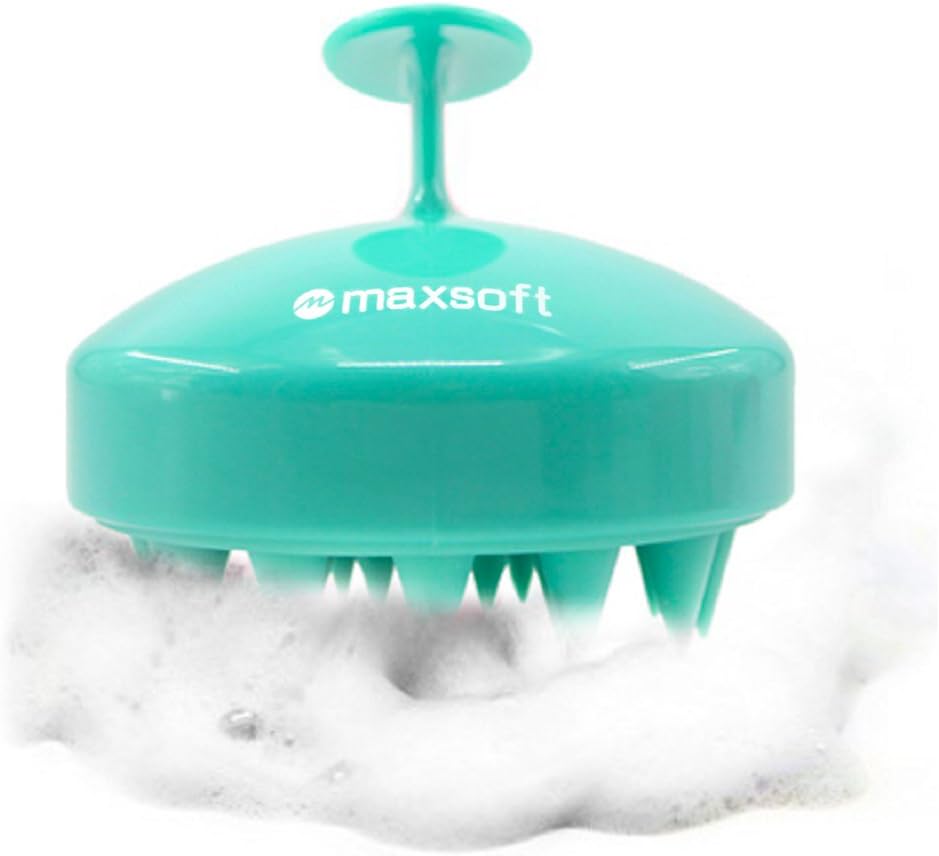
Maxsoft Scalp Massager Shampoo Brush
Soft silicone scalp massager for the shower that eases tension and loosens product buildup.
Check price on Amazon
ESARORA Ice Roller for Face and Eye, Puffiness, Migraine, Pain Relief (Blue)
Gel-filled stainless steel roller that stays cold for 15+ minutes to reduce puffiness and soothe sore muscles.
Check price on Amazon
Owala FreeSip Insulated Stainless Steel Water Bottle with Straw, BPA-Free, 24 oz
Double-wall insulated stainless steel bottle with a built-in straw and wide-mouth swig opening, keeps drinks cold up to 24 hours.
Check price on Amazon
Everything I write comes from one idea: build a life you own, one stream at a time.
Want me to show you exactly how I do it, step by step, in your language? This is where it starts.
Come build with me
Curious about Bioactive Precision Peptides, but not sure where to start?
Take the free 2-minute Wellness Quiz. It reads your answers and shows you where and how Natural Bioactive Precision Peptides could support your wellbeing.
Take the 2-minute quizMore in this lane.
How to Build a Personal Brand for Your Creative Kid
A step-by-step guide to building your creative kid's brand: domain, blog, YouTube, email, store, with them as the author. Symphony's site is the worked example.
My Mother Had Every Doubt You Have, and She Never Missed a Cycle
Three years ago money was tight in Brazil and she signed up to Natura wanting a little extra. She is on the third level of six now, and that decision is one of the main reasons she is doing well today.
My Watch Buzzed, and It Wasn't a Bill
A stranger bought a book I wrote once, and my watch told me about it while I was living my life. The quiet feeling of building digital products that sell themselves.

Get the next post in your inbox.
One email when there is something new worth reading. Writing on health, income, and the practical reality of building a life on your own terms. No spam. Easy to leave at any time.
Unsubscribe with one click, any time. Your email stays with me and Kit, my email provider. · Privacy policy
I also publish on Substack: different essays, written for the inbox, the same long game.
Also on Substack