How I Built a Full EV Publication by Myself, Using AI as a Tool
A local knowledge base, an AI drafting pipeline, quality gates, and a command centre, on one PC in Courtenay for under $300. One person, a whole publication.

May contain affiliate links; I may earn a commission at no extra cost to you. Everything here is my opinion. Full disclosures
I research, write, and edit a full electric-vehicle publication by myself. Not with a staff. With AI as the tool that lets one person do what used to take a newsroom. The total cost to build the operation, all in, was under three hundred dollars.
I built ThinkEV.ca, a Canadian electric-vehicle publication, and I run it on my own. I do the research, the writing, and the editing. What makes that possible for one person with a full-time job is the system I built around AI: a knowledge-management layer, a drafting pipeline, programmatic quality gates, automated social distribution, email monitoring, and a real-time command centre. All from a single PC in my living room in Courtenay, BC. No venture capital. No staff. Under three hundred dollars total. And I say that knowing full well that some of those dollars were mistakes I made along the way, so the actual useful spend was even less.
This is the same idea I keep coming back to when people ask me how to use AI in a small business. AI is not an employee. It is leverage. It does not replace you, it extends you, so one person can carry the workload that used to need a whole team.
Key Takeaways
I am a former ballet dancer from Brazil. English is my third language after Portuguese and Spanish. I have no computer-science degree, no MBA, and no startup playbook. I spent my career in dance studios and on stages, not in front of a terminal. What I have is a willingness to build things that would make most people say "that is too complicated for one person," and an AI toolkit that never sleeps.
Before I wrote a single blog post for ThinkEV, I built a place to store everything I was learning about the Canadian EV market. Rebate programmes by province. Charging-infrastructure data. Chinese EV manufacturers entering the market after the tariff reduction. Competitor analysis. Government policy changes. This became the Brain Server, a knowledge-management system running on my own machine. Every piece of research, every article I read, every data point goes in there. It is searchable, organised by topic, and persistent, meaning it does not disappear when I close a window or start a new session. When I sit down to write about Manitoba's EV incentives, the facts are already in the knowledge base, verified, and ready to be cited, so the AI drafting around them has no room to guess or hallucinate.
Most people who start content businesses skip this part. They jump straight to writing. That works for a while, but the moment you need consistency across dozens or hundreds of articles, you need a single source of truth. I built mine first, and everything after that was ten times easier because of it. The Brain Server is the unglamorous infrastructure beneath everything else I have built since. It is also the part nobody talks about, because building a knowledge layer feels like delay when the loudest voices in AI tell you the only thing that matters is to "ship fast and iterate."

Get the next post in your inbox.
One email when there is something new worth reading. No spam, leave any time.
Small upgrades to your wellbeing and lifestyle. Simple, well-reviewed items to support your journey. As an Amazon Associate I earn from qualifying purchases, at no extra cost to you.
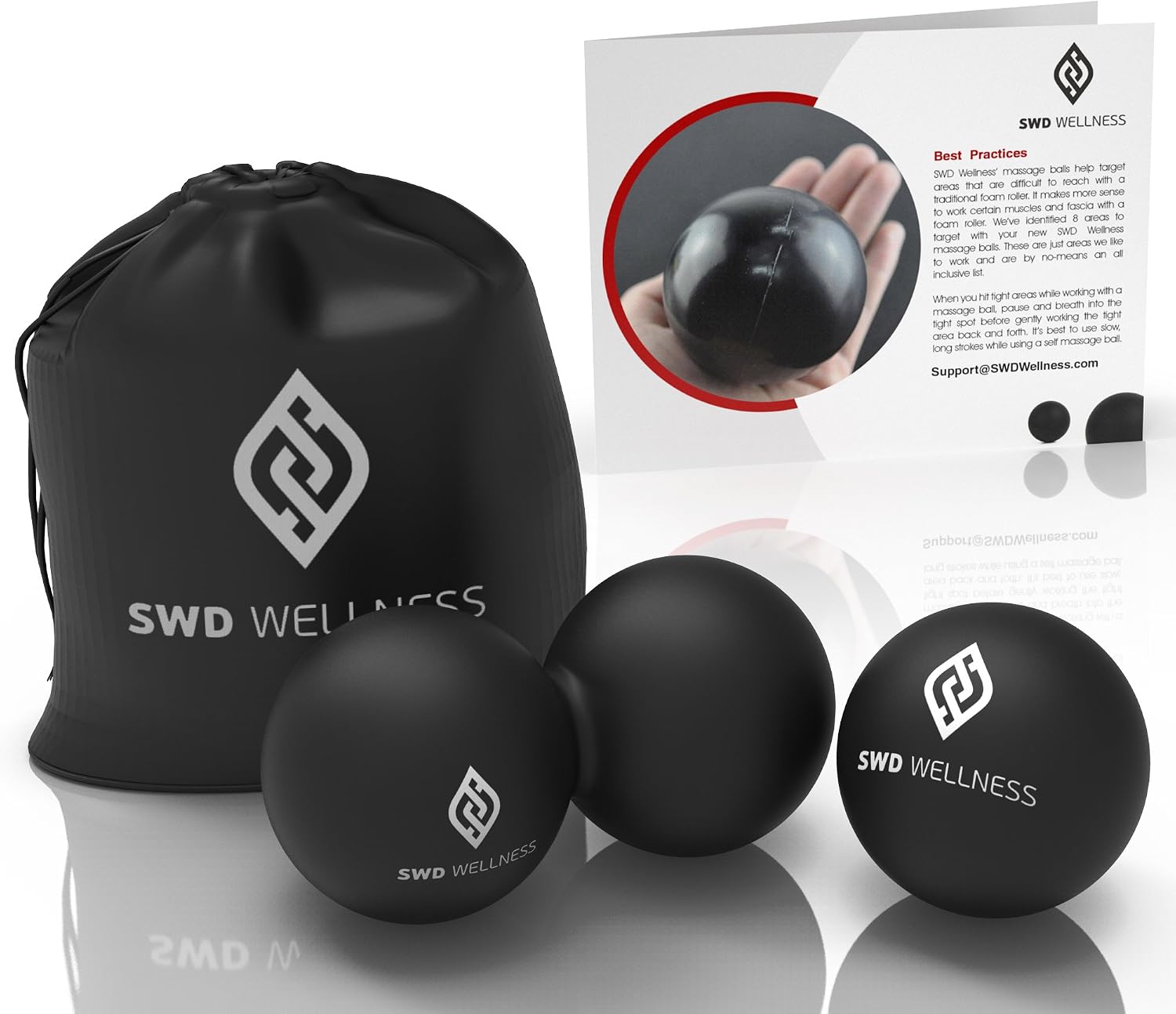
Peanut Massage Ball and Lacrosse Ball Set by SWD Wellness
Two-piece massage ball set for myofascial release, trigger point therapy, and tight muscle relief.
Check price on AmazonThe System That Lets One Person Write a Publication
A newsroom has reporters, a copy desk, a fact-checker, and an editor. I have one of each role, and they are all me, sped up by a system I built so the work actually fits into the hours I have.
A piece starts as a research skeleton, with verified facts pulled straight from the knowledge base. From there the AI drafts the article around those facts, section by section rather than all at once. Drafting in passes is what keeps the writing from collapsing into the soft, hedged, infinitely polite default that AI prose falls into when nobody is steering it, and what holds a single, consistent editorial voice across a long piece instead of letting it drift halfway through. The voice on ThinkEV is the publication's voice, the one I set and approve. The AI does the heavy lifting of turning verified research into a full draft. I do the direction, the judgement, and the final call on every word that ships.
I learned this the practical way. Early on I experimented with running several distinct drafting styles to keep the site from sounding monotonous. It taught me a lot about how to make AI hold a voice, but it added complexity without making the publication better, so I consolidated to one clear editorial voice and a stronger system underneath it. The tool is flexible enough to do almost anything, which means the discipline has to come from you. Decide what the publication sounds like, then make the system serve that, not the other way around.
Small upgrades to your wellbeing and lifestyle. Simple, well-reviewed items to support your journey. As an Amazon Associate I earn from qualifying purchases, at no extra cost to you.
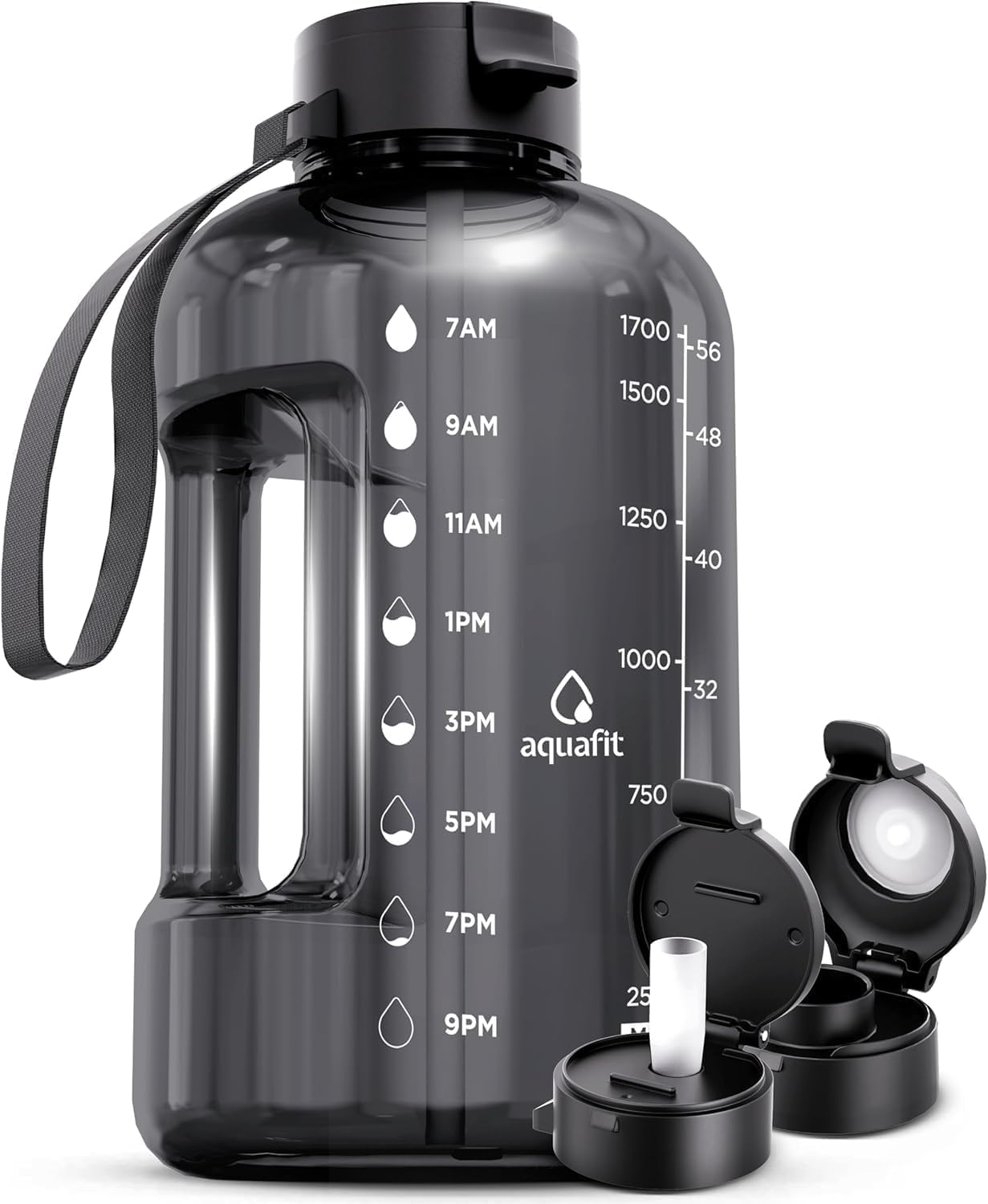
AQUAFIT 2L Water Bottle with Time Markers and Dual Lids
Half-gallon BPA-free bottle with printed time markers and two interchangeable lids to track daily water intake.
Check price on AmazonQuality Gates, Not Vibes
Most people generate something, read it, think "that looks okay," and publish. That is how you end up with a site full of content that all sounds the same and says nothing.
My pipeline has programmatic quality gates. Repetition detection catches when the same phrase shows up three times in one article. Readability scoring makes sure the writing is accessible. Fact verification checks claims against the Brain Server knowledge base. Canadian spelling enforcement catches "color" and makes it "colour". A critic system scores every piece before it can go live, and if it does not pass, it does not publish.
It is about building a system where the standards are encoded into the process itself. The AI handles the drafting. The system handles the consistency. I handle the vision and the final call. The gates are not advisory, they are blocking. A piece that fails the critic does not get a polite nudge. It gets sent back through the pipeline with the specific failures flagged for revision. That changes the entire economics of AI content. The marginal cost of producing a piece with AI is low. The marginal cost of producing a good piece is what most operators quietly ignore. Programmatic gates collapse that gap.
I also run a real-time command centre. I call it the VP Operations Command Center. One dashboard shows me the health of every system in real time: email processing, content scheduling, social-media distribution, inference routing, server health, error rates. Every morning I check it and know exactly what happened overnight, what was published, what emails came in, what failed, what needs my attention. I get a Telegram message at eight in the morning with a digest of everything: documents created, emails processed by category, social posts made, inference jobs completed, errors. Most people wait until something breaks to look at their operations. By then you are firefighting. Monitoring is not overhead. It is the difference between running your business and your business running you.
ThinkEV.ca runs on a single Windows PC with a GPU that cost me about two hundred and fifty dollars used. The AI models run locally through Ollama, which is free. The Brain Server is SQLite, which is free. The content pipeline is Node.js scripts, which is free. Hosting is on Vercel's free tier. The domain was fifteen dollars. Total infrastructure cost is under three hundred dollars. Not per month. Total. Ever. The narrative around AI in business is dominated by companies spending millions on enterprise licences and custom models, and that narrative quietly persuades smaller operators that the same outcome is out of reach for them. It is not. You do not need an enterprise contract. You need clear thinking about what your systems should do, the patience to build them right, and the humility to fix them when they break, which they will.
I built these systems because I had to. I did not have the budget to hire a content team, a social-media manager, an operations person, and a developer. I am one person with a vision and a set of AI tools I have learned to trust. So I built the infrastructure that lets one person do what used to require a full team. The work needed to get done and nobody else was going to do it. That is the thing most startup advice gets wrong. It tells you to hire fast, scale fast, spend fast. I would say build smart first. Understand your workflows so deeply that when you do grow, whether with people or with better tools, you are scaling something that already works.
The systems are not the product. The systems are what let you actually build the product. ThinkEV now has over ninety published articles, covers every province's EV incentive programmes, reviews the major electric vehicles available in Canada, and ranks for long-tail keywords that bring in readers who are actually considering buying an EV. That is the product. Everything I described above is what makes it possible for one person. And it all runs from a living room in Courtenay.

Brazilian-Canadian on Vancouver Island. Former ballet artist, current builder of small ventures. Posts here cover health, income, and the long game.
FAQ
Can a non-technical person actually build this?
I am a former ballet dancer. English is my third language. I have no computer-science degree. I built every part of this stack myself, in stolen evenings and weekends, by being willing to learn what the work required. If you have a clear vision of what your systems should do, you can build them. The hard part is not the coding. The hard part is staying clear-headed about what the systems are for while you are tempted to keep adding features. Build the minimum that solves the problem, then improve it after it has earned the right to be improved.
How much does it cost to run per month?
The infrastructure side is effectively zero. The models are local. The hosting is Vercel's free tier. The database is SQLite on my own machine. The only recurring cost is electricity, which is rolled into my regular power bill and is small because the rig idles for most of the day and only spikes when a long generation is running. The one-time costs, the used GPU, the domain, a few small tools, totalled under three hundred dollars ever.
Why local models instead of cloud AI?
Three reasons. First, cost. Local inference through Ollama is free at the margin, and a content pipeline that publishes at any real scale would otherwise rack up monthly API bills that quietly eat the margin of the site. Second, control. I own the models, the prompts, the editorial voice, and the data. Nothing leaks to a third-party log or training set unless I deliberately send it there. Third, reliability. A cloud API outage does not stop my pipeline. The trade-off is that I have to manage the rig myself. That is a trade-off I am happy to make.
How do you stop the AI from hallucinating?
Two layers. First, the knowledge base. Every claim that goes into a piece is supposed to be grounded in something already verified inside the Brain Server. The drafting expands around verified facts rather than inventing them. Second, the critic. Before a piece publishes it gets scored on multiple dimensions, one of which is fact verification against the knowledge base. Anything the critic flags as unsupported gets sent back with the specific claim marked. If I cannot ground a claim, the claim does not run.
Can I copy this stack?
Most of it, yes. Ollama, SQLite, Node.js, and Vercel are all free or close to it. The specific orchestration, the drafting pipeline, the critic, the Brain Server schema, the command-centre dashboard, is custom code I wrote for ThinkEV's particular needs. The shape is reproducible. The editorial voice is not, because the voice is mine. If you want to build something similar, start with your own knowledge base before you write a single piece.
What broke first, and what is still imperfect?
The first thing that broke was voice drift. Long pieces generated in a single pass would start strong and end in something noticeably softer and more generic. Solving that is what produced the section-by-section drafting model. What still misbehaves occasionally is upstream inference quality on edge-case prompts. The critic catches most of it, but there are still days when a piece lands flat and gets sent back for a manual rewrite. The system is good. The system is not done.
Small upgrades to your wellbeing and lifestyle. Simple, well-reviewed items to support your journey. As an Amazon Associate I earn from qualifying purchases, at no extra cost to you.

HEETA Scalp Massager for Hair Growth, Soft Silicone Bristles Shampoo Brush
Manual silicone scalp scrubber with soft wide bristles for use wet or dry to exfoliate the scalp and distribute shampoo.
Check price on Amazon
COCODOR Signature Reed Diffuser Set, Lemon Eucalyptus, 6.7oz
Oil reed diffuser with a fresh lemon-eucalyptus scent in a minimal glass bottle sized for bathroom or desk.
Check price on Amazon
Dreamegg White Noise Machine with 24 HIFI Soothing Sounds and Night Light
Sound machine offering 24 high-fidelity sleep sounds plus a soft night light, with volume control and memory function.
Check price on Amazon
Everything I write comes from one idea: build a life you own, one stream at a time.
Want me to show you exactly how I do it, step by step, in your language? This is where it starts.
Come build with me
Curious about Bioactive Precision Peptides, but not sure where to start?
Take the free 2-minute Wellness Quiz. It reads your answers and shows you where and how Natural Bioactive Precision Peptides could support your wellbeing.
Take the 2-minute quizMore in this lane.
How to Actually Make Money with AI in 2026 (Without the Hype)
AI will not make you rich while you sleep, but it is the cheapest leverage there is for real income. What works, from someone running AI-built ventures.
How to Use AI to Run a Small Business
Where AI actually helps you run a small business, in the order worth adopting it, what you should never hand it, and how to start with one workflow this week. From someone running ventures on it.
AI Side Hustles for Beginners (That Actually Pay)
AI side hustles a beginner can actually start, what each really pays, the ones to skip, and how to pick one this week. From someone building income with AI.

Get the next post in your inbox.
One email when there is something new worth reading. Writing on health, income, and the practical reality of building a life on your own terms. No spam. Easy to leave at any time.
Unsubscribe with one click, any time. Your email stays with me and Kit, my email provider. · Privacy policy
I also publish on Substack: different essays, written for the inbox, the same long game.
Also on Substack